



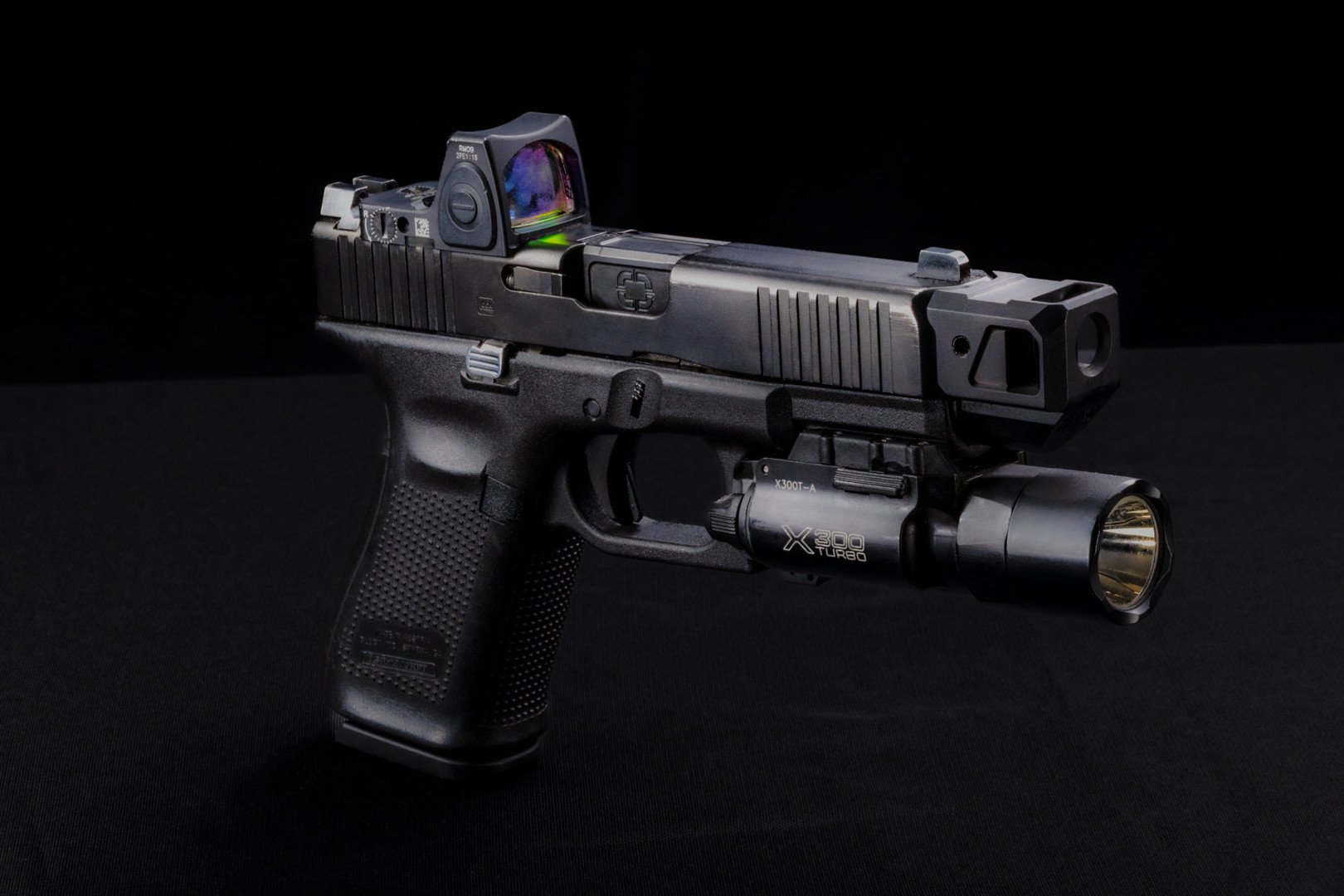
Why You Should Carry a Compensator With Your EDC
For EDC carriers who train seriously, a compensator isn’t about looking cool—it’s about faster follow-up shots, better control under stress, and measurable performance gains. Everyday carry is about preparedness, efficiency, and consistency. As concealed carriers continue to refine their setups, compensators have moved from competition-only gear to legitimate defensive tools. When properly chosen and paired with the right holster, a compensator can significantly improve how your handgun performs when it matters most.
Below, we break down why carrying a compensator with your EDC makes sense, how it improves real-world shooting performance, and what to consider before adding one to your daily setup.
What Does a Compensator Do?
A compensator redirects expanding gases upward and outward as a round is fired. This counteracts muzzle rise and reduces felt recoil. The result is a flatter-shooting handgun that stays on target longer during rapid fire.
In simple terms: less muzzle flip, more control, faster accuracy.
Faster Follow-Up Shots Matter in Defensive Encounters
Defensive shootings are rarely one-shot events. Under stress, shooters often fire multiple rounds in quick succession. A compensator helps keep the sights flatter through recoil, allowing you to:
- Reacquire your sights faster
- Deliver quicker, more accurate follow-up shots
- Maintain control during high-adrenaline shooting
When milliseconds matter, reducing the time between accurate shots can be a decisive advantage.
Improved Control Under Stress
Stress degrades fine motor skills. Grip pressure changes, trigger control suffers, and recoil becomes harder to manage. A compensator works with you when your fundamentals aren’t perfect.
Benefits include:
- Reduced muzzle climb with an imperfect grip
- Better tracking of your dot or irons
This added margin of control can be especially valuable for smaller-framed shooters or those carrying higher-pressure defensive ammunition.
Better Performance With Modern Micro-Compacts
Today’s compact and subcompact pistols are easier to conceal—but often harder to shoot well. Short barrels and lighter slides increase recoil impulse. Adding a compensator helps balance that equation by restoring shootability without sacrificing concealability.
Many modern compensators are designed specifically for:
- Micro-compacts and slimline pistols
- Threaded barrels or proprietary mounting systems
- Carry-focused builds that prioritize reliability
Paired correctly, a compensated compact pistol can shoot closer to a full-size gun while remaining EDC-friendly.
Concealment Is Less of an Issue Than You Think
One of the biggest objections to EDC compensators is size. In reality, most compensators add length, not bulk, and length is easier to conceal than width.
When paired with:
- A quality ARC holster designed for compensated pistols
- Strong Kore belt for support and ride height
- Appendix or strong-side carry
…the added length often improves concealment by helping the holster anchor against the body and reduce printing.
Reliability Has Come a Long Way
Early compensators had a reputation for compromising reliability. Modern designs—especially those tuned for carry—are engineered to function with common defensive loads.
Key reliability considerations:
- Use quality ammunition with sufficient pressure
- Stick to proven compensator designs
- Confirm reliability with your chosen carry ammo
As with any EDC modification, testing is non-negotiable. Run your setup hard before trusting it.
Training Benefits Transfer Directly to Real Life
Even if you don’t carry a compensator every day, training with one builds better recoil management habits. For those who do carry compensated, the benefits are even clearer:
- Faster splits in training translate to faster splits under stress
- Reduced recoil allows more reps with less fatigue
- Confidence in recoil control improves overall performance
A compensator doesn’t replace training—but it can amplify the results of good training.
Why Herrington Arms Compensators?
Everyday carry demands reliability, speed, and consistency, and that’s exactly where Herrington Arms compensators earn their place. In a defensive shooting, recoil control isn’t a luxury—it directly affects how quickly you can get accurate follow-up shots on target. Herrington Arms compensators are engineered to redirect gases upward, reducing muzzle rise and keeping your sights flatter through recoil. The result is faster sight reacquisition, tighter shot groupings, and greater confidence under stress.
What makes Herrington Arms especially relevant for EDC is their balance of performance and practicality. These compensators are designed to work with common carry pistols and holster setups, adding recoil mitigation without turning your firearm into an oversized range toy. When paired with modern holsters that retain the weapon light (like our ARC holster) rather than the slide, a compensated EDC can remain both concealed and comfortable. For shooters of all experience levels, reduced recoil also means better training efficiency—more consistency, and improved fundamentals over time.
At the end of the day, your EDC should help you perform at your best in the worst moments. Herrington Arms compensators enhance control without compromising reliability, making them a smart upgrade for anyone serious about defensive carry. When every fraction of a second counts, staying flat and on target isn’t optional—it’s essential.
If your EDC goal is maximum control, speed, and consistency—not just concealment—a compensator deserves serious consideration.