



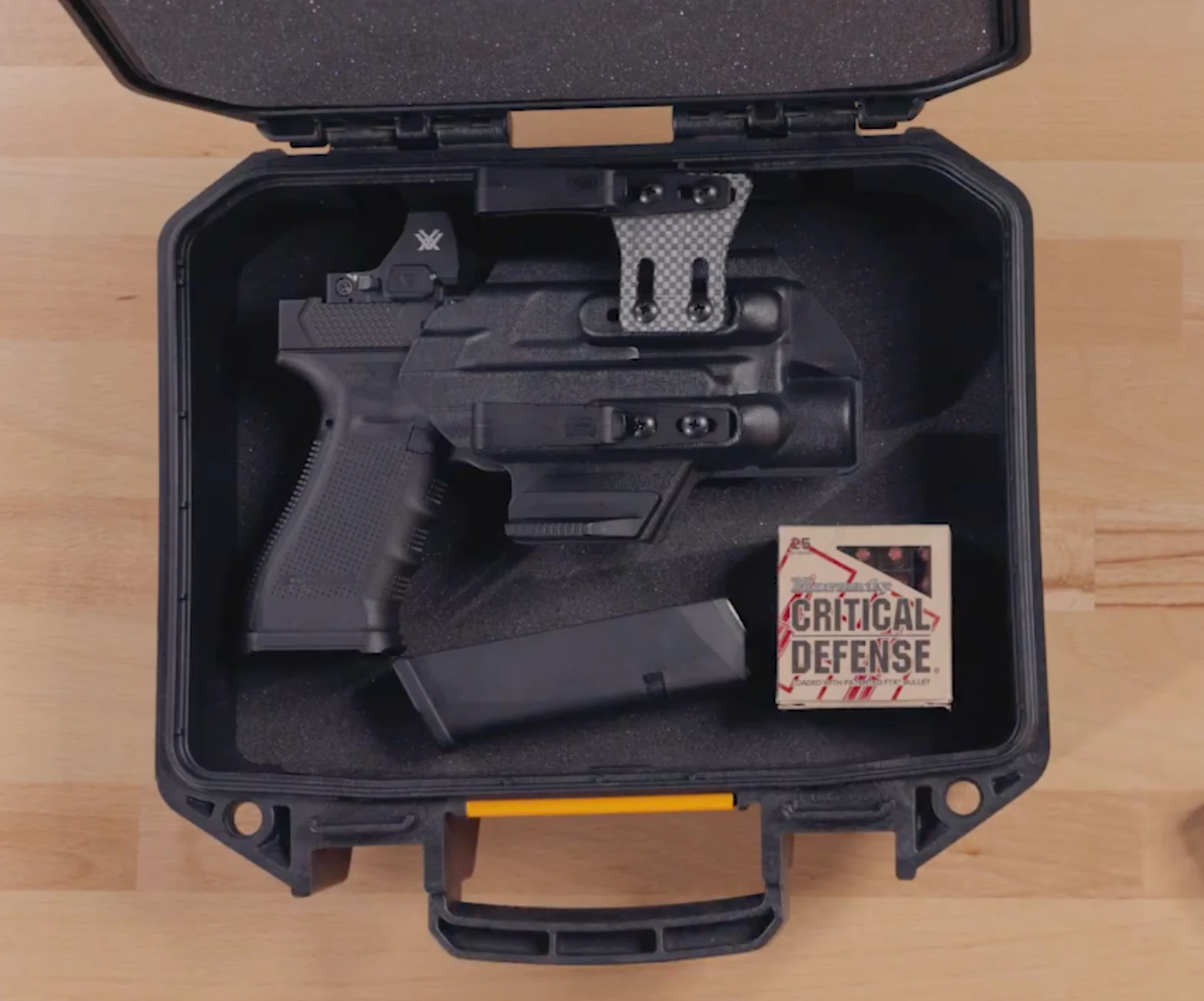
FLYING WITH A FIREARM 101
Traveling with a firearm isn’t complicated—but it is strict. Miss one detail and you can end up delayed, fined, or worse. This guide walks you through exactly how to legally fly with a firearm in the U.S., step by step, so you can move with confidence and stay compliant.
Recently, I flew for the first time with my EDC. I followed all of these steps to a tee and managed to have zero problems flying to and from a very liberal city. Follow the same steps below, and you will be good to go!
The Two Rulebooks You Must Follow
When flying with a firearm, you’re dealing with two authorities:
- Transportation Security Administration (TSA)
- Your airline (Delta, American, Southwest, etc.)
TSA sets the baseline federal rules. Airlines can add stricter requirements—but never looser ones. Ignore either, and you’re asking for problems.
Step 1: Make Sure Your Firearm Is Legal at Your Destination
Before you even think about packing, check state and local laws where you’re headed.
Some states have strict rules on:
- Magazine capacity
- Types of firearms
- Transport requirements
For example, what’s legal in Oklahoma might not be legal in places like California or New York.
If you skip this step, everything else becomes irrelevant.
Step 2: Use a TSA-Compliant Hard Case
Your firearm must be:
- Unloaded
- Locked in a hard-sided case
- Completely inaccessible
This is non-negotiable.
The case should:
- Be rigid (not soft-sided)
- Have lock points that prevent prying
- Use non-TSA locks (only you should have access)
A quality case isn’t just about compliance—it prevents damage and keeps things smooth at the airport.
Step 3: Ammunition Rules
Ammo is allowed, but it’s controlled.
TSA guidelines require:
- Ammunition stored in factory packaging or proper ammo containers
- No loose rounds
- Weight limits (typically up to 11 lbs, but airline-specific)
Some airlines allow ammo in the same locked case as the firearm, others prefer separate storage. Always verify ahead of time.
Step 4: Declare at the Airline Counter
Do not go to security first.
Go straight to the airline check-in counter and:
- Declare: “I need to declare a firearm.”
- Fill out a declaration card
- Place it where the counter attendant instructs you to.
The agent may:
- Ask you to open the case
- Visually confirm it’s unloaded
Stay calm and professional. This is routine for them. Don't be a Karen if you don't have to be.
Step 5: Lock It and Send It
Once declared:
- Lock the case securely
- Ensure only you retain the key or combination
Depending on the airport, your bag may:
- Be inspected by TSA on the spot
- Be sent to a separate screening area
Either way, don’t leave until you’re cleared.
Step 6: Picking It Up at Your Destination
Firearms don’t always come out on the standard baggage carousel.
Instead, they may be:
- Held at the airline’s baggage office
- Delivered with special handling
Bring ID and be ready to claim it directly.
Key Mistakes to Avoid
Most issues happen because people rush or assume.
Avoid these common errors:
- ❌ Bringing a loaded firearm
- ❌ Using a soft case
- ❌ Forgetting to declare
- ❌ Not checking state laws at destination
One mistake can escalate quickly. Treat this process with discipline.
Pro Tips for a Smooth Experience
- Arrive early (add at least 30 minutes)
- Print your airline’s firearm policy
- Use a dedicated travel case
- Keep ammo organized and compliant
- Stay calm and direct when declaring
You’re not doing anything wrong—but how you carry yourself matters.
In Conclusion
Flying with a firearm is completely legal when done correctly. The system is built for it—but it expects you to follow the rules exactly.
If you:
- Know the laws
- Pack correctly
- Declare properly
…you’ll have zero issues.
Cut corners, and you’re gambling with serious consequences.
Handle it the right way, and it becomes just another part of your travel routine.