



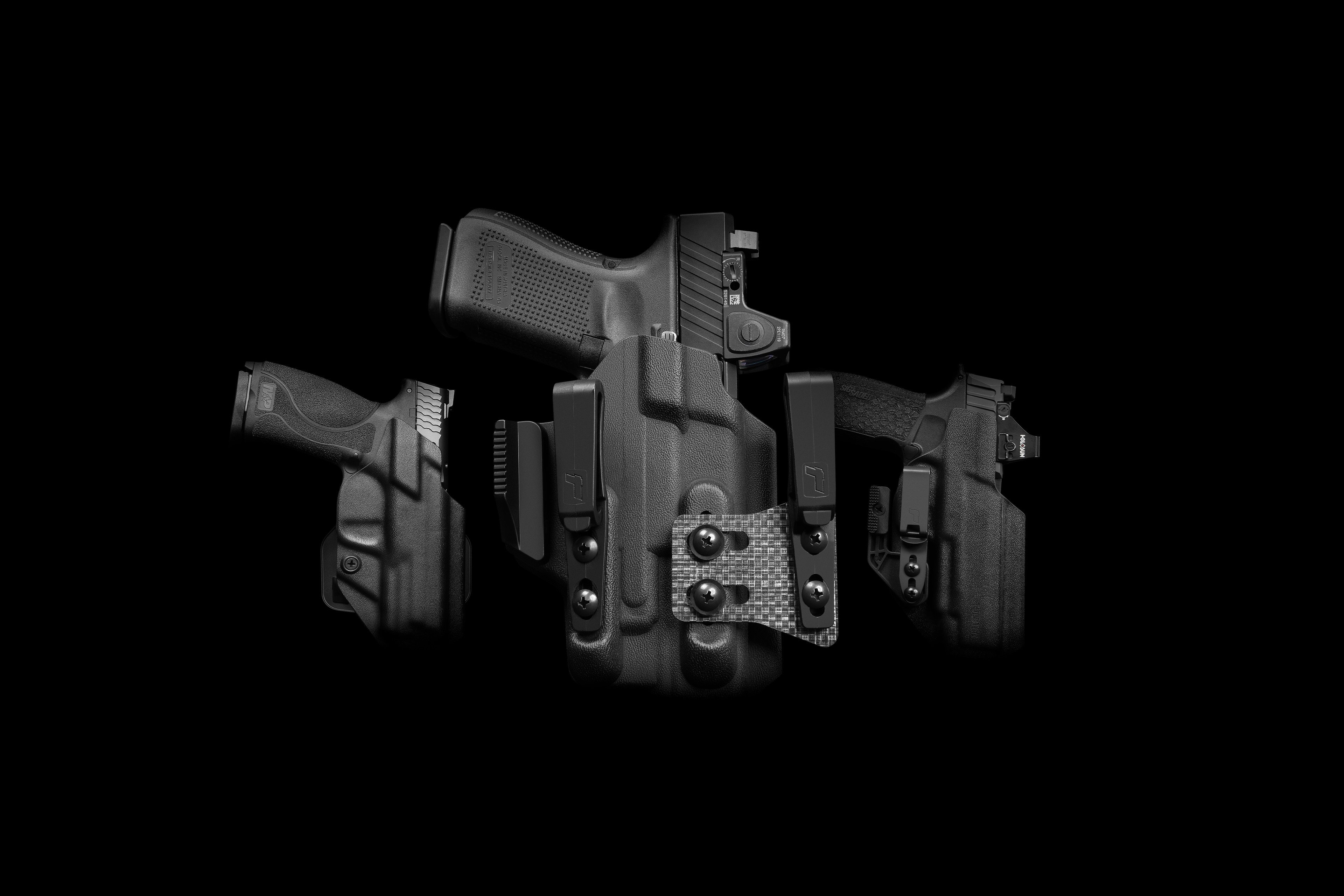
Integrated Optics, Built-In Lights, and Smarter Design
The modern handgun has already evolved dramatically over the past decade. Red dot optics are no longer niche. Weapon-mounted lights are common. Polymer frames dominate the market. But what will the handgun of the future actually look like?
If current trends continue, the next generation of pistols will be more integrated, more modular, and more intelligent than ever before. Instead of adding accessories onto a firearm, manufacturers are moving toward fully integrated systems — especially when it comes to optics and weapon lights.
Let’s break down what the future likely holds.
1. Optics-Ready as the Standard — Not the Upgrade
Red dot pistol optics have shifted from competition-only gear to mainstream defensive equipment. Brands like Trijicon, Holosun, and Aimpoint have driven innovation in durability, battery life, and enclosed emitter systems.
What Changes in the Future?
-
Slides designed specifically for optics — not milled after the fact
-
Direct-mount footprints (no adapter plates)
-
Fully enclosed emitters as the baseline
-
Lower deck heights for co-witnessing without tall suppressor sights
Instead of “optics-ready” being a premium feature, it will simply be the default. Much like rails became standard in the early 2000s, optic integration will follow the same path.
Even more likely? Slides built around a single durable footprint optimized for strength and simplicity — reducing failure points and increasing long-term reliability.
2. Integrated Weapon Lights: The End of Bolt-On Bulk
Weapon-mounted lights are now considered essential for defensive handguns. Brands like SureFire and Streamlight have dominated this category for years.
But here’s the reality: adding a light changes holster compatibility, balance, and overall size.
The Future Solution: Built-In Illumination
Imagine a frame engineered with:
-
A flush, factory-integrated light module
-
Rechargeable power systems
-
Ambidextrous activation paddles
-
Sealed electronics for durability
Instead of clamping a light onto a rail, the frame itself becomes the lighting platform.
This creates:
-
Better weight distribution
-
Slimmer profiles for concealment
-
Increased durability
-
Standardized holster fitment
We’ve already seen early experimentation in modular frame designs. It’s only a matter of time before full integration becomes viable at scale.
3. Smarter Power Systems
Battery technology continues to improve across all industries. The handgun of the future will likely combine power systems for:
-
Optics
-
Integrated lights
-
Possibly even onboard diagnostics
Future pistols may use:
-
Rechargeable internal battery packs
-
Magnetic charging ports
-
Solar-assisted optic technology
-
Auto-on and motion-detection systems
Optics already offer multi-year battery life. The next step is creating seamless power ecosystems that reduce maintenance without sacrificing reliability.
4. Advanced Materials and Durability
Polymer changed the handgun market decades ago, led by companies like Glock. The next evolution may involve:
-
Hybrid metal-polymer frames
-
Advanced carbon composite materials
-
Improved corrosion resistance
-
Reduced reciprocating mass in slides
Expect lighter guns without sacrificing strength — especially for concealed carry applications.
5. Enhanced Ergonomics and Modularity
The handgun of the future won’t be one-size-fits-all.
Interchangeable grip modules (already seen in various modern platforms) will likely become more customizable. Adjustable backstraps were just the beginning. Future pistols may allow:
-
Adjustable grip circumference
-
Interchangeable trigger shoe geometry
-
Modular dust covers with integrated electronics
-
Customizable frame texture inserts
The goal? A handgun that fits the shooter — not the other way around.
6. Suppressor and Compensator Integration
As suppressor and compensator use grows in popularity, expect factory-designed integration rather than aftermarket add-ons.
Instead of threaded barrels sticking out awkwardly, future designs may include:
-
Flush-fit compensator systems
-
Slide-integrated recoil mitigation
-
Optimized gas flow systems
-
Factory suppressor-ready slide profiles
This results in better reliability and smoother shooting performance without compromising concealability.
7. Data, Diagnostics, and Training Feedback
This one is more speculative — but not unrealistic.
Smart technology may eventually provide:
-
Round-count tracking
-
Maintenance reminders
-
Integrated shot timers
-
Training data synced via secure apps
The key challenge will always be maintaining reliability while integrating electronics. But the broader tech world shows us that miniaturization and ruggedization continue to improve.
What Won’t Change
Despite technological advances, the fundamentals remain:
-
Reliability is king
-
Simplicity matters
-
Durability under stress is non-negotiable
No shooter wants unnecessary complexity in a defensive firearm. The manufacturers who win the future will be those who balance innovation with mechanical dependability.
Final Thoughts: The Evolution Is Integration
The handgun of the future isn’t about adding more gadgets. It’s about integrating them intelligently.
Instead of:
-
Optic plates
-
Rail-mounted lights
-
Aftermarket compensators
We’re moving toward:
-
Optics as part of the slide
-
Lights built into the frame
-
Power systems engineered from the ground up
The next generation of handguns will likely feel cleaner, slimmer, and more purpose-built — not cluttered.
If you’re watching trends in the firearms industry, pay attention to integration. That’s where innovation is heading.
And when the future arrives, the most successful platforms won’t just be upgraded versions of today’s pistols — they’ll be redesigned from the ground up around optics, illumination, and intelligent modularity.