




Essential EDC Medical Gear: What You Need to Carry to Save a Life
When people talk about everyday carry (EDC), the focus is usually on firearms, holsters, lights, and knives. But the reality is simple: the most likely life-saving tool you’ll ever use isn’t a gun—it’s medical gear.
Car accidents, workplace injuries, range accidents, and public emergencies happen far more often than defensive shootings. Carrying the right EDC medical kit allows you to stop bleeding, manage trauma, and keep someone alive until EMS arrives.
This guide breaks down the essential medical gear you should carry every day, why each item matters, and how to build a practical, concealed EDC medical setup.
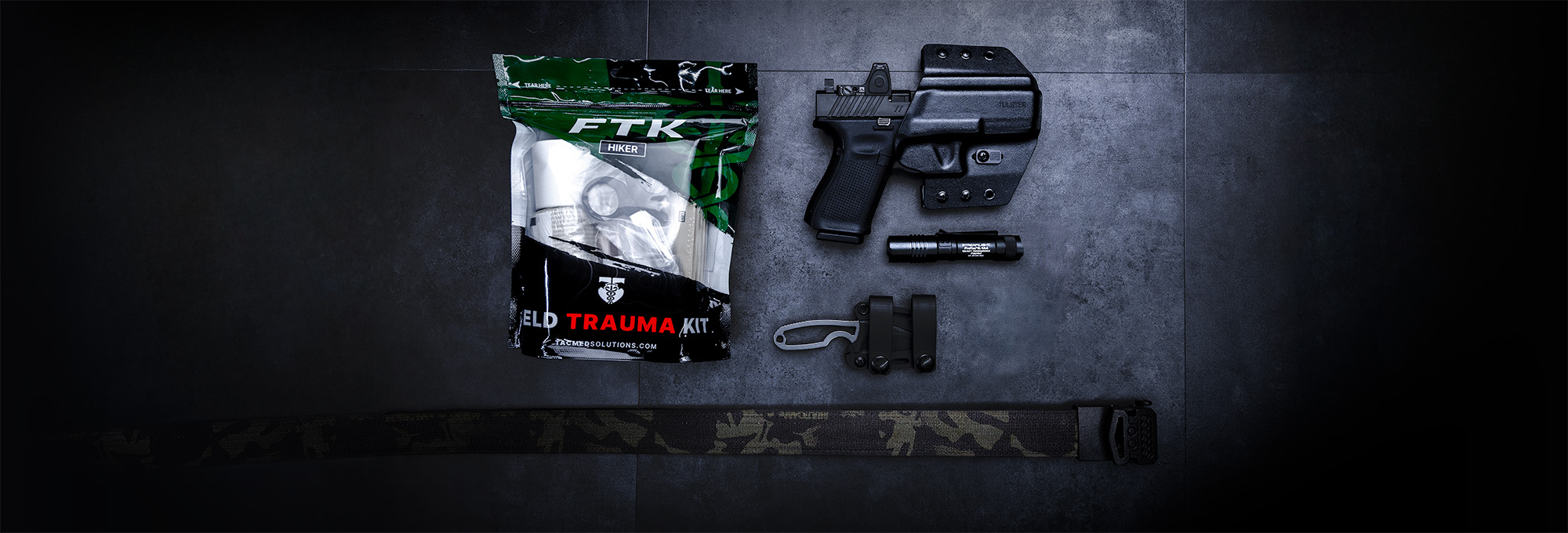
Why Carry Medical Gear Every Day?
Severe bleeding can be fatal in three to five minutes. Emergency response times are often longer than that.
Whether you’re a concealed carrier, first responder, outdoor enthusiast, or responsible citizen, medical EDC fills the gap between injury and professional care. In many situations, you may be the first—or only—person able to help.
Medical gear is:
-
Legal everywhere
-
Non-violent
-
Useful in nearly any emergency
-
Effective even with minimal training
If you carry a firearm for worst-case scenarios, carrying medical gear is the logical next step.
Tourniquets: The Most Critical EDC Medical Item
If you carry only one medical item, make it a tourniquet.
Why Tourniquets Matter
Uncontrolled bleeding from an arm or leg is the leading preventable cause of death in trauma. A quality tourniquet can stop massive hemorrhage in seconds.
What to Look For
Choose a proven, one-handed operable tourniquet:
Avoid cheap knockoffs. Tourniquets are life-saving tools—this is not the place to cut corners.
How to Carry
-
Belt-mounted pouch
-
Bag or vehicle kit
-
Dedicated EDC medical carrier
Pressure Bandages: Controlling Bleeding Beyond Tourniquets
Not all bleeding can be treated with a tourniquet. That’s where pressure bandages come in.
Recommended Options
-
Compression trauma bandages
Use Cases
-
Wounds to the torso, neck, or head
-
Post-tourniquet wound packing
-
Moderate to severe bleeding
Pressure bandages combine compression, dressing, and securing into one compact package, making them ideal for EDC kits.
Gauze: Versatile and Essential
Gauze may not look impressive, but it’s one of the most versatile tools in trauma care.
Types of Gauze to Carry
Why Gauze Matters
-
Wound packing for deep lacerations
-
Absorbing blood
-
Supporting pressure bandages
-
Improvised wound care
Hemostatic gauze is especially valuable because it helps accelerate clotting, buying precious time in severe bleeding scenarios.
Chest Seals: Treating Penetrating Chest Trauma
Penetrating chest injuries—whether from accidents or violence—can cause a sucking chest wound, leading to a collapsed lung.
Chest Seal Basics
Chest seals are adhesive devices that cover open chest wounds, preventing air from entering the chest cavity.
Recommended Features
-
Vented design
-
Twin pack (entry and exit wounds)
-
Easy-to-apply adhesive
Popular options include:
Chest seals are lightweight, flat, and easy to include in a compact EDC medical kit.
Gloves and Personal Protection
Medical aid is about helping others—but protecting yourself matters too.
Gloves to Carry
-
Nitrile gloves (latex-free)
-
Compact, rolled pairs
Gloves protect you from bloodborne pathogens and allow you to provide care safely and confidently.
Other Valuable EDC Medical Gear
Beyond the core items, consider adding:
Trauma Shears
-
Cut clothing quickly
-
Access wounds without moving the patient
Marker or Sharpie
-
Record tourniquet application time
-
Mark injuries for EMS
Emergency Blanket
-
Prevent shock
-
Retain body heat after trauma
CPR Mask
-
Barrier protection during resuscitation
These items add minimal bulk while increasing your ability to manage real-world emergencies.
How to Build a Practical EDC Medical Kit
Your EDC medical kit should be:
-
Compact
-
Accessible with either hand
-
Carried consistently
Minimal EDC Setup
-
Tourniquet
-
Gauze
-
Pressure bandage
-
Gloves
Expanded EDC / IFAK Setup
-
Tourniquet
-
Hemostatic gauze
-
Pressure bandage
-
Chest seals
-
Gloves
-
Trauma shears
The best medical kit is the one you’ll actually carry—every day.
Training Matters
Medical gear is only effective if you know how to use it.
Seek out:
-
Stop the Bleed courses
-
Basic trauma or first aid training
-
Range or community medical classes
Even basic instruction dramatically increases your ability to act under stress.
Medical Gear Is Responsible EDC
Carrying medical gear isn’t about fear—it’s about preparedness and responsibility.
You’re far more likely to use a tourniquet than a firearm. You’re far more likely to encounter an accident than a threat. And when that moment comes, having the right EDC medical gear can mean the difference between life and death.
If you carry every day, carry the tools to save a life.