



Off-Body Carry vs. On-Body Carry: An Honest Comparison
Off-body carry is one of the most debated topics in the concealed carry community — and for good reason. Carrying a firearm in a bag, purse, or pack seems like a practical solution to real problems: tight clothing, physical discomfort, workplace restrictions, or just not wanting to think about dressing around a holster every morning. But the tradeoffs are significant, and understanding them clearly can mean the difference between a defensive tool you can access under pressure and one that's two steps removed from you at the moment you need it most.
This post covers both methods honestly. Off-body carry isn't inherently wrong — there are circumstances where it's a reasonable choice. But on-body carry with a well-designed holster removes most of the objections people have, and this guide will help you evaluate both options with clear eyes.
What Is Off-Body Carry?
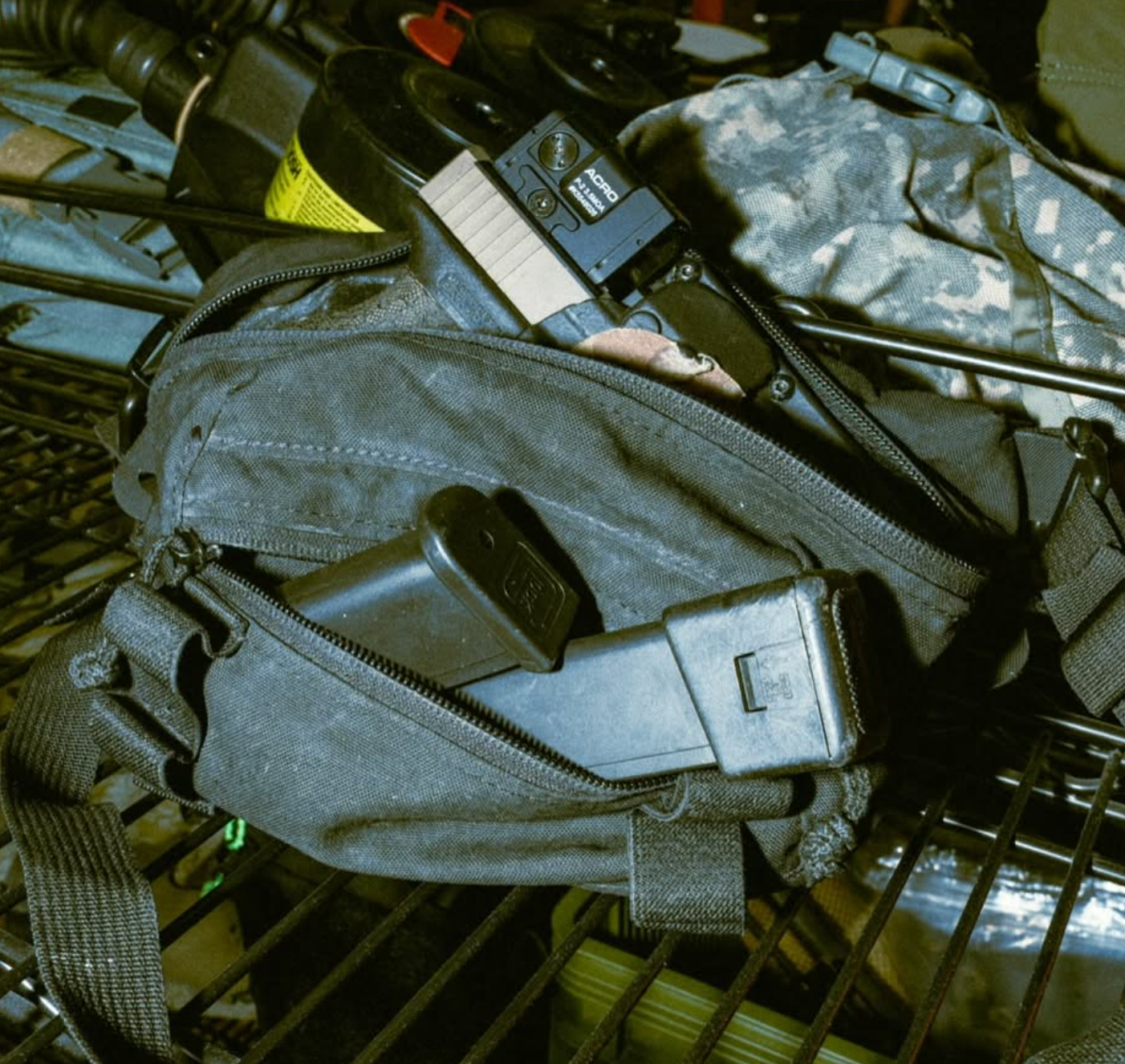
Off-body carry means your firearm is secured in a bag, purse, pack, fanny pack, or dedicated concealed carry accessory — something separate from your clothing that you carry with you. The gun isn't on your person; it's on something you're holding or wearing separately. In this video, Tim is rocking the Spiritus Systems BIG Fanny Sack with an ARC holster and NeoMag Panel Attatchment.
Common off-body carry methods include:
- Concealed carry purses with dedicated gun compartments
- Backpacks with lockable firearm pockets
- Crossbody sling bags with holster inserts
- Fanny packs or waist packs designed for concealed carry
- Briefcases or laptop bags with built-in compartments
On-body carry, by contrast, means the firearm is secured directly on your person — typically in an IWB or OWB holster attached to your belt, waistband, or clothing — and stays with you regardless of what else you're holding.
Why People Choose Off-Body Carry
Off-body carry isn't an arbitrary choice. People gravitate toward it for legitimate reasons:
Clothing Flexibility
On-body carry requires you to dress around a holster. Untucked shirts, higher waistbands, specific pant cuts — the wardrobe calculus is real. For someone in a client-facing professional environment, or someone who wears fitted clothing, accommodating a holster every day can feel like a constant compromise. A carry bag sidesteps that entirely.
Physical Comfort
Some carriers — particularly those with certain body types, medical conditions, or physical limitations — find on-body carry genuinely uncomfortable. Significant abdominal mass can make AIWB impractical. Hip conditions or injuries can make waistband carry painful. For these carriers, off-body may be the only realistic option for carrying at all.
Carrying a Larger Firearm
A bag can accommodate full-size pistols that would be difficult to conceal on-body for smaller or slimmer carriers. If a particular person's only realistic on-body option is a compact or subcompact, but they prefer a full-size for capacity and shootability, off-body gives them an option.
Workplace or Situational Restrictions
Some work environments make on-body carry impractical — tight security areas, dress code requirements, or physical work that involves bending, lifting, or contact with others. In these cases, off-body may be the only way to keep a firearm in the equation at all.
The honest case for off-body: For some carriers in some situations, it's the option that keeps a firearm in the picture at all. An off-body carry is meaningfully better than no carry.
The Real Risks of Off-Body Carry
Understanding the limitations of off-body carry isn't about dismissing it — it's about managing it intelligently if you choose it. These aren't hypothetical concerns; they're practical realities that affect how usable your firearm will be when it matters.
Separation Is Always One Moment Away
The most fundamental risk of off-body carry is that the firearm is only as secure as your grip on the bag. A purse set down in a restroom stall, a backpack left at your desk during a meeting, a bag tossed into the backseat of a car — in every one of these scenarios, the firearm is no longer under your direct control. This isn't a character failing; it's human nature. We set bags down constantly without thinking about it. On-body carry eliminates this variable entirely. The gun goes where you go, always, because it's part of what you're wearing.
Bag theft is the other dimension of this. A purse snatcher or opportunistic thief who grabs your carry bag doesn't just get your wallet — they get your firearm. That gun can then be used against you or others. The same physical proximity that makes a concealed carry bag convenient also makes it a high-value target.
Draw Speed and Access Are Compromised
Under stress, the additional steps between you and your firearm matter enormously. On-body carry from a quality IWB holster involves a practiced grip, a clear draw stroke, and the gun in your hands. Off-body carry adds: locating the right compartment, unzipping or unsnapping access, managing a moving bag that shifts independently of your body, and then executing a draw from an inconsistent starting position.
Even highly practiced bag draws are slower than practiced holster draws. Under the conditions of an actual defensive encounter — elevated heart rate, reduced fine motor control, potential physical interference — that gap gets wider, not narrower. The two-handed nature of many bag draws (one hand to hold the bag steady, one to draw) also means one hand is occupied and not available for other defensive purposes.
Unauthorized Access
A firearm in a bag is accessible to anyone who opens the bag. Children, coworkers, family members, and strangers can access it the moment you set it down. On-body carry keeps the firearm physically on your person at all times, which is the most effective form of access control in everyday carry situations. If you have children in your home or regularly share space with curious hands, off-body carry demands a constant vigilance that is difficult to sustain.
Accidental Discharge Risk
A holster covers the trigger guard. That is its most critical safety function. When a firearm is loose in a compartment — or even in a dedicated pocket without a proper holster — objects like keys, pens, flashlights, or drawstrings can find their way into the trigger guard. Concealed carry bags with dedicated holster pockets mitigate this, but it requires discipline to ensure nothing else ever goes in that pocket. On-body carry in a quality Kydex holster provides full trigger guard coverage by design, every time.
The core off-body vulnerability: The firearm is only accessible when the bag is with you, only as secure as your situational awareness, and always one extra step from your hands when it matters most.
The Case for On-Body Carry
On-body carry's advantages flow from a single principle: the firearm is always with you, always in the same place, always accessible the same way. That consistency compounds over time into the kind of reliable, practiced access that works under stress.
Your Draw Is Consistent and Practiced
Muscle memory is built through repetition of exactly the same motion. When your firearm is in a fixed position on your body every day, every draw practice rep reinforces the same path: same grip, same clearing motion, same draw stroke. That consistency is what makes the draw reliable when it counts. Off-body carry's variability — different bags, different orientations, shifting positions inside a bag — works against the consistency that practice is trying to build.
The Firearm Stays With You
You never set your body down and walk away from it. On-body carry means the gun goes to the bathroom with you, into the meeting with you, and into the car with you. There is no moment when it becomes accessible to someone else because you forgot it, because you were momentarily distracted, or because social norms made you feel like you had to leave it somewhere.
Both Hands Are Free
An on-body draw is achievable with one hand. That matters when the other hand is protecting a family member, managing a door, or occupied in a physical struggle. Bag draws are typically two-handed affairs — one to control the bag, one to draw — which means the defensive picture is more complicated before the gun is even in play.
Better Retention Against a Physical Threat
If a threat involves physical contact before you can draw, a firearm on your body in a retention holster is significantly harder to take than a firearm in a bag being held at your side. You can use your body to protect access to an on-body holster in ways you simply cannot protect a bag.
The Real Objections to On-Body Carry — and How They're Solved
Most people who default to off-body carry aren't choosing it because they think it's tactically superior. They're choosing it because on-body carry seems uncomfortable, inconvenient, or incompatible with how they dress. Those objections are real — but they're mostly holster problems, not carry problems.
"On-body carry is uncomfortable all day"
Most comfort complaints about on-body carry trace back to holster quality and setup, not the method itself. A holster that digs into your hip, rides at the wrong height, or uses stiff, poorly finished Kydex is genuinely uncomfortable. A holster designed with minimal material, smooth edge finishing, correct geometry for your carry position, and adjustable cant is a different experience entirely. Many carriers who dismiss on-body carry as uncomfortable haven't tried a purpose-built, well-fitted holster — they've tried the one that came in the box with the gun.
"I can't conceal a gun in my normal clothes"
This is partly a holster problem and partly a wardrobe problem — and the wardrobe part is usually smaller than people think. A low-profile Kydex IWB holster with a concealment claw adds less bulk than most people expect. For AIWB carry, an untucked shirt of almost any weight conceals a full-size pistol for most body types. The adjustments are real but minimal: a slightly higher waistband, an untucked shirt, a cover garment that falls past the hip. Most carriers who've found a holster setup they like describe the wardrobe adjustment as less significant than they anticipated.
"I need to be able to carry anywhere, even in professional settings"
This is the most legitimate version of the off-body objection. Some environments make on-body carry impractical regardless of holster quality. For those situations, a properly managed off-body carry option — with a genuine holster insert in a dedicated compartment, carried vigilantly at all times — is a reasonable response. The goal isn't to eliminate off-body carry as an option; it's to make it the exception rather than the default.
When Off-Body Carry Makes Sense
This guide isn't an argument that off-body carry is always wrong. There are situations where it's the right call:
- Physical limitation makes on-body carry consistently painful or impractical
- A specific environment or activity makes on-body carry genuinely unworkable that day
- As a transitional solution while finding the right on-body holster setup
- As a supplement to on-body carry — the bag carries extra ammunition, a medical kit, or items that support the overall defensive picture
What off-body carry should not be is the default choice made because on-body carry seems hard. The right holster makes on-body carry comfortable enough that most of the off-body objections simply stop applying.
How Tulster Makes On-Body Carry the Easy Choice
The most common reason people gravitate to off-body carry is that on-body carry with the wrong holster is genuinely unpleasant. Tulster's holsters are designed around the opposite problem: make the holster disappear so carrying it isn't a daily negotiation.
The Profile IWB uses .08" Kydex — thinner than most competitors — with excess material trimmed away at the muzzle end. That's not just aesthetics; the muzzle cut is where most appendix holsters cause discomfort for seated carriers, and removing unnecessary material there makes a real difference over hours of carry. The undercut trigger guard promotes a higher grip on the draw, the edge finishing is matte and smooth against skin and clothing, and cant adjusts from 0 to 30 degrees without tools.
The OATH adds brings comfort to your EDC for carriers who find hard plastic against skin uncomfortable over long days — a practical solution that doesn't compromise the rigidity and retention that make Kydex the right material for a carry holster.
For carriers who want the concealment benefits of a claw without building it into the base holster, the SideKick attaches to the trigger guard and levers the grip inward against your belt. It's additive — you use it when you need it, leave it off when you don't — rather than a fixed feature that adds bulk to every carry situation.
Every holster ships same day from Jenks, Oklahoma, with a lifetime warranty and hassle-free returns. If a holster doesn't work for your setup, you're not stuck with it.
The Bottom Line
Off-body carry is a legitimate option for specific situations and specific carriers. But it carries real tradeoffs — slower access, vulnerability to separation, unauthorized access risk, and the discipline required to carry a bag at all times without exception. For most carriers in most situations, on-body carry is safer, faster, and more reliable.
The objections that push people toward off-body carry are mostly holster problems. A holster that's genuinely comfortable, genuinely concealable, and purpose-built for how you live and dress removes most of those objections at the source. If you've been carrying off-body because on-body felt impractical, the right place to start is with a better holster — not a better bag.
Explore Tulster's IWB holster lineup at tulster.com — same-day shipping, lifetime warranty, made in Oklahoma.