



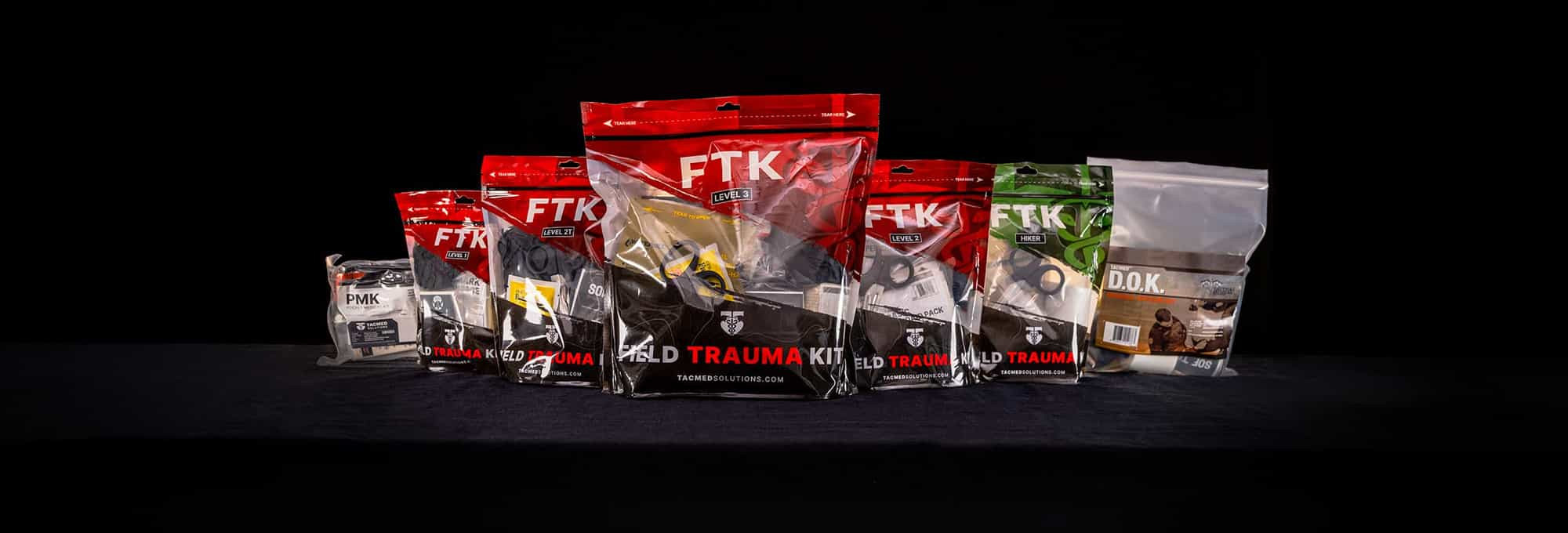
What You Need to Carry and How to Train With It
Everyday carry is evolving.
For years, most EDC conversations focused entirely on firearms, knives, flashlights, and gear setups. But a major shift is happening within the preparedness community: more people are realizing that medical capability is just as important as defensive capability.
Because the reality is simple.
You are statistically more likely to encounter:
- a car accident
- severe bleeding injury
- workplace trauma
- medical emergency
…than a defensive gunfight.
That’s why medical EDC matters.
Carrying trauma medical equipment gives you the ability to respond immediately during life-threatening emergencies instead of standing by helplessly waiting for EMS to arrive.
But equipment alone is not enough.
You also need training.
What Is Medical EDC?
Medical EDC refers to the trauma-focused medical gear you carry daily to handle emergencies involving severe bleeding or traumatic injuries.
Unlike large medical bags or full trauma kits, medical EDC is designed to be:
- compact
- accessible
- lightweight
- practical for daily carry
The goal is immediate intervention during the first critical minutes of an emergency.
Because in traumatic injuries, time matters more than almost anything else.
Why Medical EDC Is Important
Massive blood loss can become fatal within minutes.
In many emergencies:
- police are delayed
- ambulances are delayed
- hospitals are far away
That means the first person on the scene often becomes the first responder.
Prepared civilians should understand that readiness is not just about stopping threats—it’s also about preserving life afterward.
Modern preparedness should include:
- defensive capability
- trauma medical capability
- communication skills
- situational awareness
Ignoring medical readiness creates a major gap in preparedness.
The Core Medical EDC Items You Should Carry
You do not need an oversized medic bag to make a difference.
A practical medical EDC setup focuses on the essentials.
1. Tourniquet (Most Important)
If you carry only one medical item, it should be a quality tourniquet.
Recommended examples include:
Tourniquets are designed to stop life-threatening bleeding from arms and legs.
They are critical because:
- Severe arterial bleeding can kill quickly
- Direct pressure is not always enough
- Improvised tourniquets often fail
A tourniquet should be:
- easily accessible
- staged properly
- carried consistently
Do not bury it deep in a backpack where you cannot reach it quickly.
2. Gauze or Wound Packing Material
Not all bleeding can be controlled with a tourniquet.
Wound packing gauze helps control bleeding in:
- junctional areas
- deep wounds
- traumatic punctures
Many medical professionals recommend:
- compressed gauze
- hemostatic gauze
Proper wound packing requires training and repetition.
This is not something you want to figure out during a real emergency.
3. Pressure Dressing
Pressure bandages help maintain compression after wound packing.
These are useful for:
- stabilizing injuries
- maintaining pressure
- protecting packed wounds
Compact pressure dressings are excellent additions to any trauma-focused EDC setup.
4. Chest Seals
Chest seals are designed to help treat penetrating chest injuries.
They are commonly used for:
- gunshot wounds
- puncture injuries
- traumatic chest trauma
Modern chest seals are:
- compact
- lightweight
- easy to carry
Even if you never personally use one, having the capability matters.
5. Medical Gloves
Gloves are often overlooked but extremely important.
They help:
- protect against bloodborne pathogens
- improve hygiene during treatment
- reduce contamination risks
A small pair of nitrile gloves takes up almost no space.
There is no excuse not to carry them.
6. Trauma Shears
Trauma shears allow rapid access to injuries by cutting:
- clothing
- seatbelts
- gear
This saves time during emergencies and improves treatment access.
Compact trauma shears are inexpensive and highly useful.
Where to Carry Medical EDC
Medical gear only works if it’s accessible.
Good carry options include:
- pocket medical kits
- ankle-mounted kits
- backpack compartments
- vehicle trauma kits
- sling bags
- range bags
The best setup is the one you will actually carry consistently.
Large kits left at home are less useful than compact kits you keep nearby every day.
Why Training Matters More Than Gear
This is where many people fail.
Buying medical equipment without training creates false confidence.
You must understand:
- how to apply a tourniquet
- how to pack wounds
- how to identify life-threatening bleeding
- how to respond under stress
Without repetition, people freeze during emergencies.
Training builds:
- confidence
- speed
- familiarity
- calm decision-making
Preparedness is not ownership.
Preparedness is capability.
Best Ways to Train With Medical EDC
1. Take a Stop the Bleed Course
STOP THE BLEED courses are one of the best starting points for civilians.
These classes teach:
- tourniquet use
- wound packing
- pressure application
- trauma response basics
Most courses are beginner-friendly and highly practical.
This should be considered foundational training.
2. Practice Tourniquet Application Regularly
Tourniquet application should become second nature.
You should practice:
- one-handed application
- support-hand application
- seated application
- low-light application
The goal is efficiency under pressure.
Because fine motor skills degrade during stress.
3. Train With the Exact Gear You Carry
Do not train with one setup while carrying another.
You need familiarity with:
- placement
- deployment
- opening methods
- organization
Under stress, people default to repetition.
Consistency matters.
4. Incorporate Medical Into Range Training
Many firearms instructors now integrate medical scenarios into shooting classes.
This is valuable because it teaches:
- stress transitions
- problem-solving
- post-incident response
- emergency prioritization
A realistic mindset includes understanding what happens after the shooting stops.
5. Refresh Skills Consistently
Medical skills degrade over time.
You should revisit:
- tourniquet drills
- wound packing
- emergency protocols
…regularly.
Even short refreshers help maintain capability.
Common Mistakes People Make
Buying Cheap Medical Gear
Low-quality tourniquets and counterfeit medical products are a major issue.
Do not gamble on life-saving equipment.
Buy reputable gear from trusted manufacturers.
Carrying Too Much
Oversized kits often become inconvenient and get left behind.
Focus on:
- practicality
- consistency
- accessibility
A streamlined kit carried daily is far more valuable.
Ignoring Training
This is the biggest mistake.
Medical gear without training is just equipment.
Capability comes from practice.
Medical EDC and Responsible Preparedness
The modern EDC mindset is changing.
More responsible carriers now understand:
- carrying defensive tools matters
- carrying medical tools matters too
Because emergencies are unpredictable.
And being prepared means having the ability to both protect life and preserve it afterward.
This shift represents maturity within the preparedness community.
Medical EDC is not about fear or paranoia.
It’s about responsibility.
The ability to respond during a traumatic emergency can genuinely save lives:
- your own
- your family’s
- a stranger’s
- someone at the range
- someone in a vehicle accident
Preparedness today means more than carrying gear.
It means developing capability.
A quality medical EDC setup paired with consistent training gives you something most people lack during emergencies:
The ability to act when it matters most.