



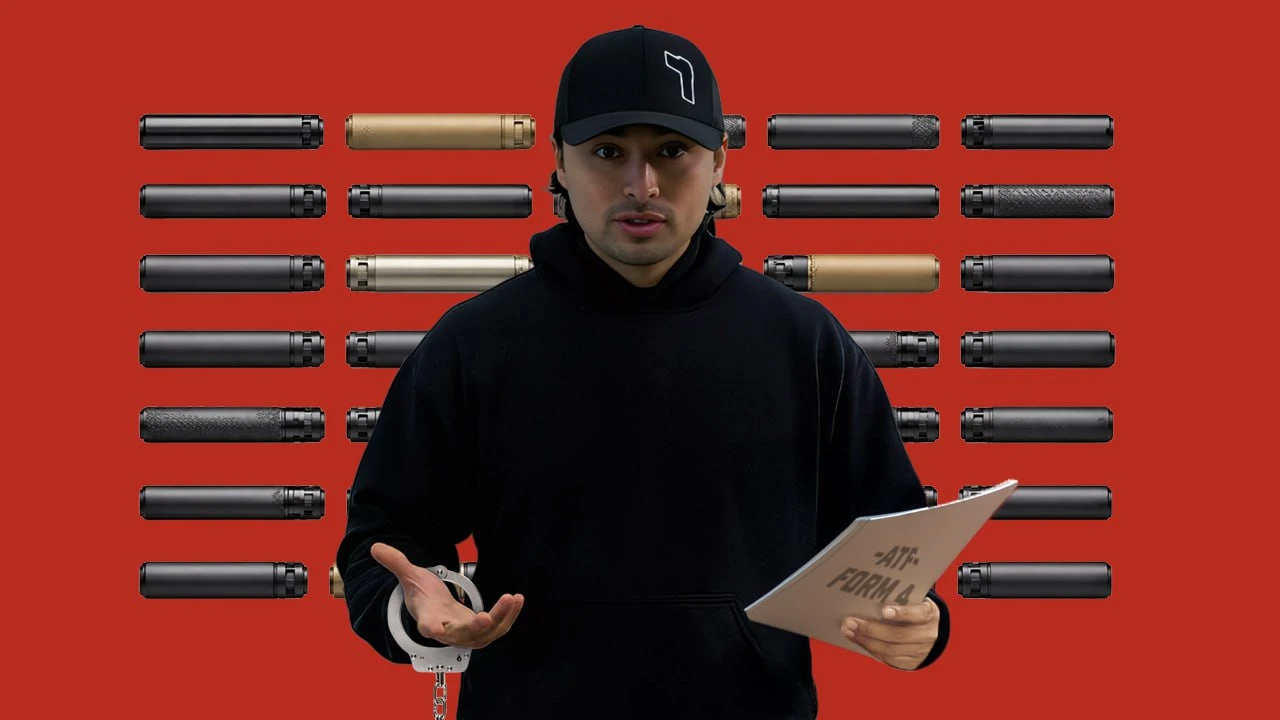
The NFA May Be Dying
Quick Summary:
Do I still need a tax stamp and ATF approval to buy a suppressor or SBR in 2026? As of January 1, 2026, the $200 federal tax on suppressors, short-barreled rifles, short-barreled shotguns, and AOWs was reduced to $0 under the tax bill known as H.R. 1 — but that alone didn't remove the NFA registration process (Form 1 or Form 4, fingerprints, photos, and ATF approval), which still applies nationwide. Separately, a federal court in the Northern District of Texas ruled on August 5, 2026 that the registration requirement itself is unconstitutional now that the tax is zero, and as of August 13, 2026 that ruling took effect as an active injunction in that district after the government let its stay lapse. It is still geographically limited to that one federal district, and the government retains the right to appeal — everywhere else, and for anyone unsure whether they fall inside that district, assume the full process still applies unless your dealer or attorney tells you otherwise.
The NFA Just Changed Twice in One Year
If you've spent any time in a gun forum, a dealer's group chat, or the comments section of a firearms YouTube channel in the last few months, you've probably seen some version of the claim that "NFA items are deregulated now." That's not quite right, and getting the details wrong here matters more than with most gun-culture rumors — this is federal law, and the gap between what's actually true and what's being repeated online could put a buyer in real legal jeopardy or an FFL out of compliance.
Here's what's actually happened, in the order it happened, and what it means for the two groups asking about it most: everyday buyers considering their first suppressor or SBR, and the FFL/SOT dealers who have to process the paperwork.
This isn't legal or compliance advice. NFA law is federal, fast-moving right now, and the court case discussed below is actively being litigated. Talk to your FFL, your compliance provider, or an attorney who handles Title II firearms law before you rely on anything here for a specific transaction.
Change One: The $200 Tax Stamp Dropped to $0 (This Part Is Settled)
Starting January 1, 2026, the tax bill known as H.R. 1 reduced the federal transfer and making tax on suppressors, short-barreled rifles (SBRs), short-barreled shotguns (SBSs), and "any other weapons" (AOWs) from $200 to $0. Machine guns and destructive devices were not included — that $200 tax is still in place for those categories.
This part is law, it's in effect nationwide, and it isn't in dispute. What it did not do is remove the rest of the NFA process. You still have to file the paperwork — an eForm 1 if you're making an item like an SBR yourself, or a Form 4 if you're buying a suppressor or other NFA item through a dealer — you still submit fingerprints and a photo, you still go through an ATF background check, and you still wait for approval before you can take possession. Full removal of NFA items from the registration system entirely was actually attempted in the same bill and didn't survive — it was stripped out under the Senate's Byrd Rule, which limits what can go into a budget reconciliation bill to items with a direct fiscal effect. A $0 tax passed. Deregistration did not.
For everyday buyers, the practical effect of this change alone is straightforward: an NFA item that used to cost you $200 more than the sticker price now doesn't. The wait, the paperwork, and the background check are all still part of the process.
Change Two: A Federal Court Just Questioned Whether the Rest of the NFA Can Survive a $0 Tax
This is the newer, much less settled part of the story, and it's the one generating the most confusion.
On August 5, 2026, a federal judge in the Northern District of Texas ruled in Jensen v. ATF (consolidated with a related case brought by the Second Amendment Foundation, the Citizens Committee for the Right to Keep and Bear Arms, and the Silencer Shop Foundation) that the NFA's registration and approval requirements for suppressors, SBRs, SBSs, and AOWs can no longer stand on their own. The court's reasoning traces back to how the NFA was originally justified: Congress passed it in 1934 as a tax law, and the registration, fingerprinting, and approval requirements were upheld by courts specifically because they supported the government's ability to collect that tax. Once Congress zeroed out the tax on those categories, the court held, the constitutional basis that had been propping up the registration requirements went with it. The government argued the requirements could stand on the Commerce Clause instead — the court rejected that argument, finding the regulatory scheme was built solely on the taxing power.
Two things matter enormously here, and both are why this section of the post needs to stay current until the day it publishes:
The injunction is now actually in effect — but only in one district. The judgment initially came with a seven-day stay to let the government seek emergency relief from the Fifth Circuit Court of Appeals. The government let that window close without seeking an extension, so as of August 13, 2026, the injunction took effect in the Northern District of Texas. That's a meaningfully bigger deal than where things stood a week earlier — this is no longer a ruling waiting on the sidelines, it's an active injunction. It still doesn't apply nationwide on its own, and the government retains the ability to appeal to the Fifth Circuit going forward.
Geography still matters more than the headlines suggest. Jensen v. ATF is a Northern District of Texas decision, and the injunction's reach follows the court that issued it. It doesn't apply nationwide unless it's upheld and expanded on appeal, adopted by other courts, or the government stops enforcing the underlying requirement more broadly as a matter of policy. Anyone outside that district — the vast majority of buyers and dealers — should not assume this case has changed their own purchase or compliance process yet.
In other words: this is now a genuinely significant, live legal development — a federal court found part of a 90-year-old regulatory scheme unconstitutional, and an actual injunction is in force, not just a ruling on paper. But "in force in one district" and "in force for you" are still two different things for almost everyone reading this.
What This Means for Consumers
If you're considering a suppressor, SBR, or SBS purchase in 2026, here's the version that's actually actionable:
The $0 tax is real and it's yours to take advantage of right now — that part of the math already changed in your favor. The registration process, fingerprints, and ATF approval wait are still real too, and you should plan your purchase timeline around that being true until your own dealer tells you otherwise. Expect that wait to potentially get longer before it gets shorter: dealers are already reporting a spike in applications from buyers who held off until the tax dropped, and volume increases tend to slow ATF processing across the board, not just for the applications tied to the surge.
If you happen to live inside the Northern District of Texas, this is no longer purely academic — there's an active injunction covering your area, and that's exactly the situation where "ask your dealer or an attorney what this means for your specific transaction" stops being boilerplate advice and starts being the actual next step. Everywhere else, keep an eye on the Jensen appeal, but don't make a purchasing or paperwork decision based on an assumption that it already applies to you. If and when a ruling changes the process nationwide, your dealer and the ATF's own guidance will be the sources to confirm it — not a forum post.
What This Means for FFLs and SOTs
For dealers, this is less a single event to react to and more an operational stretch to plan for.
The forms are changing even where the underlying process isn't. Expect revised versions of Form 1, Form 4, and Form 5 with the tax-payment sections removed or altered, and make sure staff are trained on the current version before processing transactions — a form filed on an outdated version is still a compliance headache even when the tax amount itself isn't the issue.
Everything else on the compliance side stays in place for now, for the overwhelming majority of dealers: fingerprints, photos, background checks, state-law restrictions layered on top of federal requirements, registration itself, and your recordkeeping obligations. None of that changed with the tax. If your operation sits inside the Northern District of Texas, the calculus is genuinely different right now given the active injunction, and that's a conversation to have directly with counsel or your compliance provider rather than inferring from a blog post — the practical, day-to-day guidance from ATF and industry compliance groups on how dealers in that district should actually handle transactions is still developing. For everyone outside that district, plan operations around the process as it exists today, not around where the litigation might land next.
Build in room for delay. A buyer surge plus a still-manual approval pipeline is a predictable bottleneck. If you can set expectations with customers up front about longer wait times, you'll spend less time fielding "where's my approval" calls later. And keep your eForms system, fingerprint equipment, and staff training current — this is exactly the kind of moment where a dealer running outdated processes gets caught flat-footed by a paperwork change that a dealer running current systems barely notices.
Finally, this is a genuinely good moment to have a real conversation with your compliance provider or counsel about what Jensen could mean for your operation if it survives appeal — not because anything needs to change today, but because "we already talked this through" beats "we're figuring this out in real time" if the ruling does expand.
The Bottom Line
Two things are true about the NFA right now, and they're easy to blur together but shouldn't be: the tax is gone, nationwide, permanently, as of January 1, 2026. The rest of the process — registration, fingerprints, background checks, ATF approval — is still very much alive everywhere except, right now, inside one federal district where an active injunction has actually taken hold. Watch that second story closely — it's moving fast, and it may keep moving. But unless you're standing inside the Northern District of Texas, don't act as though it's already resolved in your favor.
Talk to your FFL or Title II compliance provider about how these changes affect your specific transaction or operation.