



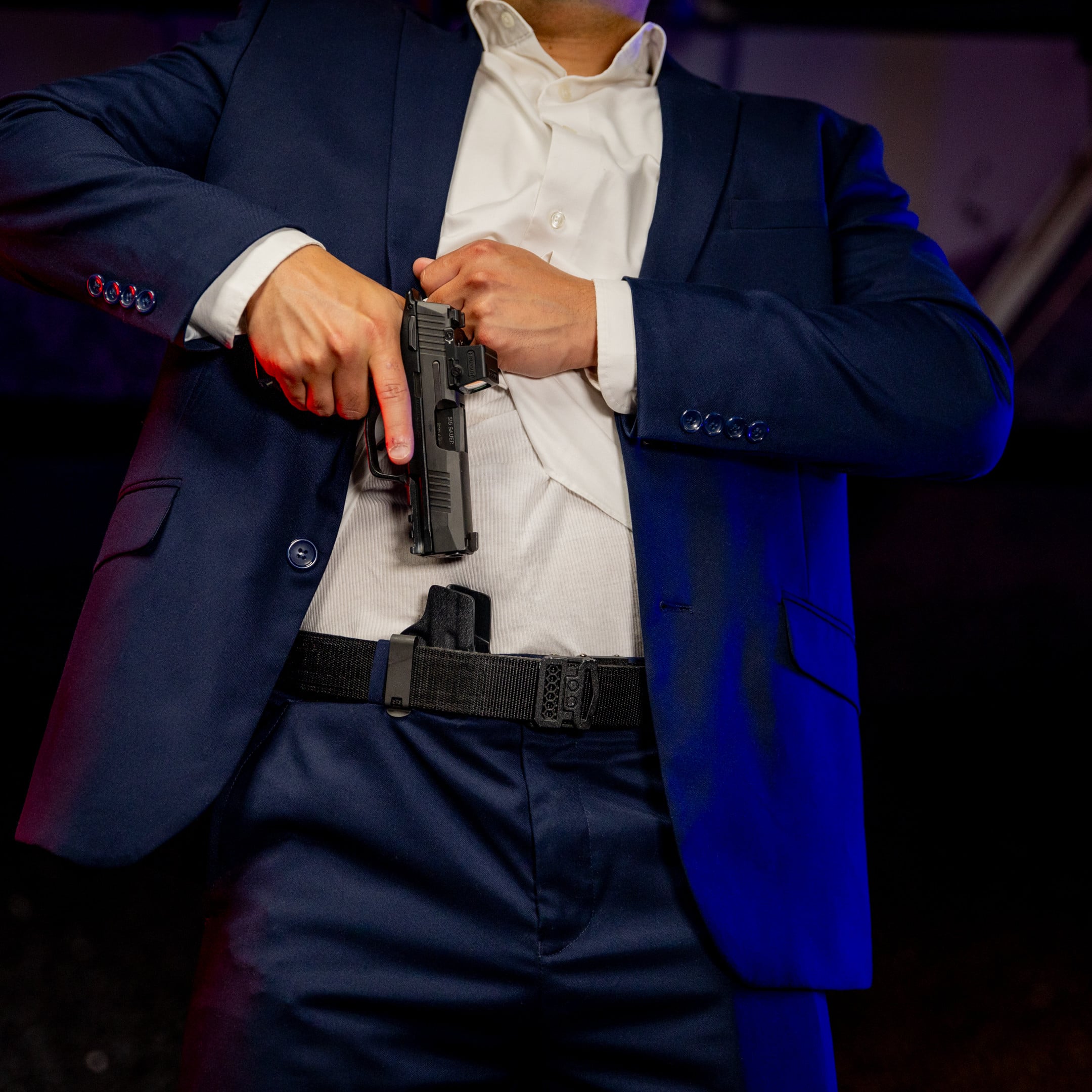
Which Tulster Holster Is Right for You?
Quick answer
The OATH and the Profile+ are both built on the same Tulster foundation — .08" Kydex, undercut trigger guard, open mag release, lifetime warranty — but they solve different problems. Choose the OATH if you want maximum concealment and tuckability and don't mind fixed retention. Choose the Profile+ if you want on-the-fly adjustable retention and cant, and you're carrying right- or left-handed only (not switching sides). Both are optic-ready for red dots from brands like Trijicon, Holosun, and others. The rest comes down to how you carry, not how well either one is made.
If you've spent any time in the Tulster reviews section, a forum thread, or the comments on a gear review, you've probably run into the same fork in the road: OATH or Profile+. It's a good problem to have. Both holsters come out of the same Jenks, Oklahoma shop, built by people who still think a holster's job is to disappear until you need it — no extra material, no unnecessary bulk, nothing between you and a clean draw. The disagreement isn't about quality. It's about which set of trade-offs matches how you actually carry.
This isn't a marketing comparison designed to nudge you toward the pricier option. Both holsters sell at the same price point, and Tulster builds both to the same standard. What follows is a straight breakdown of where they're identical, where they diverge, and which one fits your situation — so you order once, and you order right.
What the OATH and Profile+ have in common
Before getting into the differences, it's worth being clear about what doesn't change between them, because it's most of the holster:
Both are molded from .08" Kydex with a sleek matte-edge, hand-buffed finish — no exposed seams, no scratchy edges against your shirt. Both feature Tulster's signature undercut trigger guard, which lets you get a full, high grip on the pistol the moment it clears the holster instead of fighting the holster's edge on the draw. Both have an open mag release for admin reloads, a raised sight channel for aftermarket sights, and an open-ended muzzle so threaded barrels pass through clean. Both are optic-ready, accommodating common red dots like the Trijicon RMR and SRO. And both carry Tulster's lifetime warranty and are made entirely in the USA.
In other words: the engineering DNA is identical. If you've read that the Profile (the OATH and Profile+'s predecessor) gets praised for having "flawless design and finishing with very few downsides," that reputation carries over to both current models. The question isn't which one is made better. It's which one is made for you.
Where they actually differ
Orientation: ambidextrous vs. handed
This is the single biggest functional difference. The OATH is ambidextrous — you can relocate its hardware from one side to the other, so the same holster works for right- or left-handed carry. The Profile+ is not ambidextrous; it's manufactured in separate right-hand and left-hand versions, so you need to order the correct one for your dominant hand.
If you're buying for yourself and you know your hand, this may not matter much. It matters more if you're buying as a gift, outfitting a household with mixed-handed shooters, or you just don't want to think about it twice.
Retention: fixed multi-stage vs. adjustable
The OATH uses multi-stage fixed retention — you tighten the hardware down fully for maximum security, and two included shims let you dial in two lighter retention stages if you want an easier draw. Once it's set, it stays set; there's nothing to fidget with.
The Profile+ uses a rubber spacer and a Phillips screwdriver to adjust retention on the fly. If you like to tune your draw resistance seasonally, or you're testing fit across a couple of different pistols, that adjustability is a real advantage.
Neither approach is more secure than the other. It's a question of whether you want to set it once and forget it, or keep a screwdriver in the toolbox for tuning.
Cant: fixed vs. adjustable up to 30 degrees
The Profile+ offers adjustable cant up to 30 degrees, letting you fine-tune the draw angle for appendix, strong-side, or kidney carry. The OATH's wing and clip placement mean it doesn't offer adjustable cant and is built primarily around appendix or strong-side carry as-is.
If you experiment with carry position or like to dial in your angle precisely, the Profile+ gives you more to work with here.
Concealment: the ModWing vs. the sweat shield (and the SideKick)
This is where the design philosophies really show. The OATH ships with a pre-installed ModWing — a medium 3/8" insert is on the holster out of the box, with a larger 1/2" insert included if you want more concealment. The wing pushes against the back of your belt, leveraging the grip of the pistol toward your body and reducing visible printing. Combined with the OATH's tuckable clip, it's the more aggressively concealment-engineered of the two.
The Profile+ doesn't include a wing or claw. What it has instead is a full sweat shield — because it isn't ambidextrous, Tulster can build a sweat shield that fully covers the side of the firearm against your body, flush with the top of the gun. It's a clean, minimal answer to concealment that doesn't add hardware. If you want a wing-style push later, the Tulster SideKick ($12.99, sold separately) attaches to the trigger guard and works on the Profile+ the same way the ModWing works on the OATH — Tulster's way of letting you add concealment only if and when you decide you want it, rather than building it in for everyone whether they need it or not.
Neither approach is wrong. The OATH bets that most concealed carriers want maximum printing reduction from day one. The Profile+ bets that a clean, minimal holster is the right default, with the option to add a claw later if your build or wardrobe calls for it.
Clip and tuckability
The OATH's DCC MOD4U Clip is a metal clip purpose-built from a 10XX steel alloy with high clamping force, and it's the reason the OATH is tuckable — you can wear it with a tucked-in shirt and adjustable ride height, appendix or strong-side. The Profile+ uses the DCC Monoblock steel clip (an upgrade from the older plastic quick clip), which is durable and secure on the belt but isn't designed for tucking your shirt in over it.
If tucked-in carry is part of your routine — office environments, more formal dress, summer button-downs — that's a meaningful point in the OATH's favor.
Choose the OATH if you want to...
Carry tucked in. Set your retention once and stop thinking about it. Maximize concealment out of the box with the ModWing pre-installed. Have one holster that works whether you're right- or left-handed.
Choose the Profile+ if you want to...
Adjust your cant and retention on the fly with a screwdriver. Run the cleanest, most minimal holster Tulster makes, and decide later whether you want a claw. Carry strong-side, appendix, or kidney with a dialed-in angle. Know exactly which hand you're buying for and want the more streamlined hardware setup.
Frequently asked questions
Is the OATH or Profile+ better for appendix carry? Both work well for appendix carry. The OATH's ModWing is purpose-built to reduce printing in the appendix position, while the Profile+'s adjustable cant lets you fine-tune the draw angle. If concealment is your top priority, lean OATH. If angle control matters more, lean Profile+.
Can I use a red dot optic with either holster? Yes. Both the OATH and Profile+ are optic-ready and accommodate common red dot sights from brands like Trijicon and Holosun.
Do I need the SideKick if I buy the Profile+? Not necessarily. The Profile+'s full sweat shield and minimal build work well for most carriers as-is. The SideKick ($12.99) is there if you later want a wing-style concealment boost — it's an option, not a requirement.
Which holster is better for beginners? Neither is more "beginner" than the other, but some new carriers find the Profile+'s lack of wing hardware simpler to put on and take off. Others prefer the OATH's set-it-and-forget-it fixed retention. If you're not sure, the OATH's ambidextrous design is one less decision to get wrong.
Will either holster work with a weapon light? No — neither the OATH nor the Profile+ is compatible with weapon-mounted lights. If a light is part of your setup, watch for Tulster's ARC holster, which is built for optics and lights from brands like SureFire and Streamlight.
The bottom line
Both holsters reflect the same build philosophy Tulster has carried since the first one came out of a two-car garage in Jenks: minimal material, real craftsmanship, nothing added that doesn't earn its place. The OATH and Profile+ aren't competing products so much as two answers to the same question, built for two different carriers. Know how you carry, and the right holster picks itself.
Ready to see them side by side? Shop the OATH series or shop the Profile+ series and find your fit.