



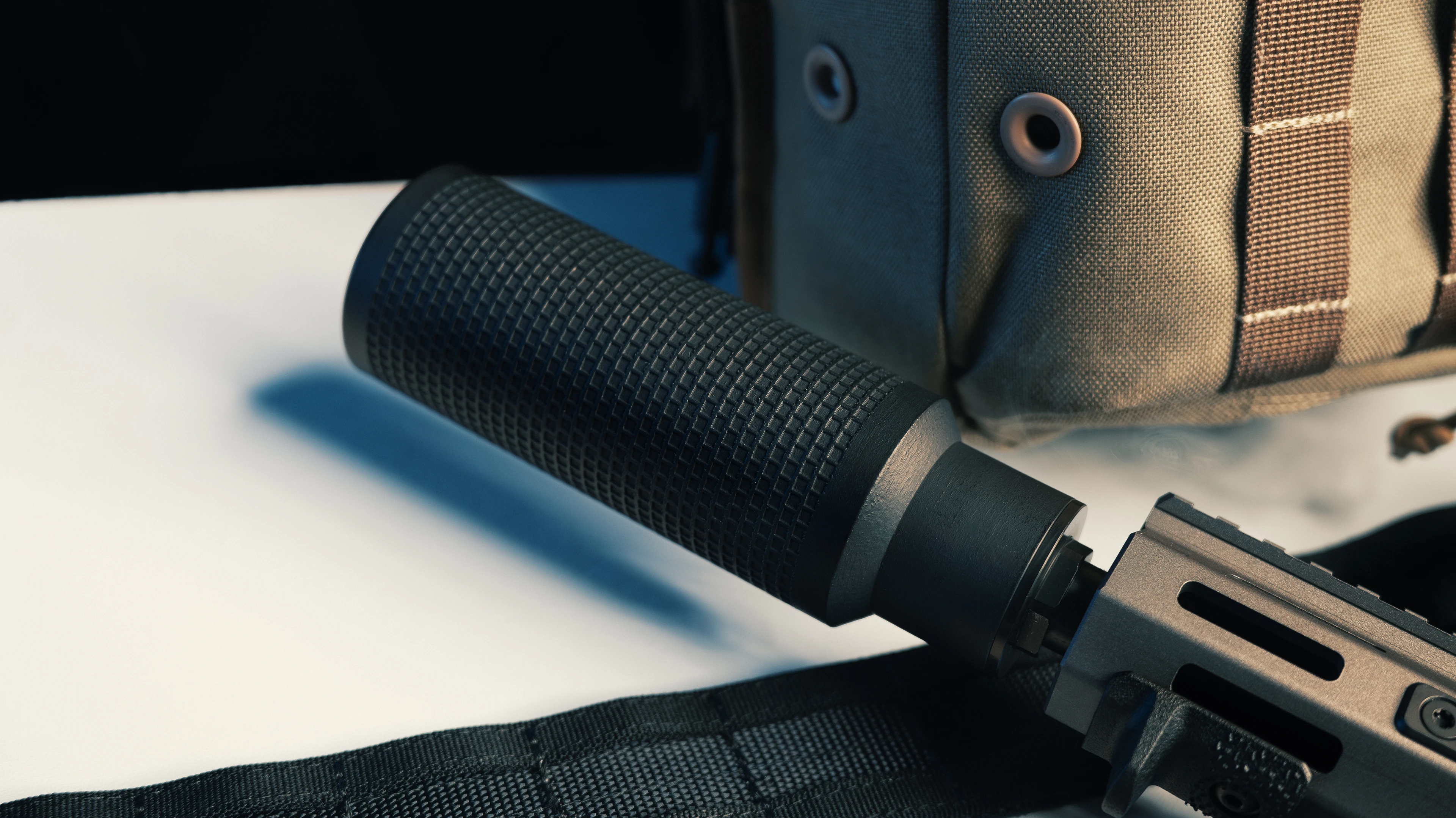
How To Buy A Suppressor With A 4473
For ninety years, buying a suppressor meant fingerprint cards, passport photos, a $200 check and a long wait for a federal stamp. In 2026, that changed in three steps. If you live in the right state and buy from a dealer who has opted in, you can now fill out the same Form 4473 you'd use for a gun, pass a NICS check, and walk out with a can the same day.
That's the headline. The fine print matters more than usual here, because this is a policy built on a court ruling, not a new law. Here's what happened, what it means at the counter, and where the old rules still apply.
The short answer: In most free states, yes, you can buy a suppressor with a Form 4473 and no Form 4. A federal court in Texas ruled on August 5, 2026 that NFA registration for $0-tax items exceeds Congress's taxing power, the Justice Department declined to appeal, and on October 9, 2026 ATF announced it will no longer enforce NFA registration or approval for suppressors nationwide. You still need a 4473 and a background check. State law still applies, and roughly 15 states still require a Form 4.
This article is general information, not legal advice. Current as of October 30, 2026. Talk to your dealer and, if in doubt, a firearms attorney before you buy.
How we got here: the tax, the ruling and the ATF letter
The 4473-only suppressor didn't come from one decision. It came from Congress zeroing out a tax, a court ruling on what that did to the law, and ATF choosing to stand down.
Step one: the tax went to zero. The National Firearms Act of 1934 was written as a tax law. The One Big Beautiful Bill Act, passed in 2025, cut the NFA making and transfer tax on suppressors, short-barreled rifles, short-barreled shotguns and "any other weapons" from $200 to $0, effective January 1, 2026. Machine guns and destructive devices kept the $200 tax.
Step two: the court followed the logic. In Silencer Shop Foundation v. ATF (consolidated with Jensen v. ATF), plaintiffs including Silencer Shop, SilencerCo, B&T USA, Palmetto State Armory and Gun Owners of America argued that if the government collects no tax, it can't lean on its taxing power to justify registration and approval. On August 5, 2026, the U.S. District Court for the Northern District of Texas agreed. The ruling rested on the Taxing Clause, not the Second Amendment, and the injunction initially protected only the plaintiffs and their customers and members.
Step three: the government stood down. The Justice Department let its October 5 appeal deadline pass without appealing. On October 9, 2026, ATF went further than the court required and announced it would not enforce NFA registration, tax-stamp or approval requirements for suppressors, SBRs, SBSs and AOWs for anyone, nationwide.
|
Date |
What happened |
|---|---|
|
Jan 1, 2026 |
$0 NFA tax on suppressors, SBRs, SBSs and AOWs takes effect |
|
Aug 5, 2026 |
N.D. Texas rules in Silencer Shop Foundation v. ATF; injunction covers plaintiffs and their members |
|
Aug 12–13, 2026 |
Seven-day stay expires; injunction takes effect |
|
Oct 5, 2026 |
DOJ appeal deadline passes with no appeal |
|
Oct 9, 2026 |
ATF announces nationwide non-enforcement of NFA registration and approval for covered items |
The distinction worth remembering is that the court decided the law can't be enforced against the plaintiffs. ATF decided, as a matter of policy, not to enforce it against anyone. Policy can be changed by the next director.
What actually changes at the counter
In a free state, buying a suppressor now looks like buying any other firearm. You pick the can, complete a Form 4473, the dealer runs NICS, and on a "Proceed" you take it home. Silencer Shop reports that online orders ship to your dealer in a couple of days, with same-day pickup after the background check.
|
Form 4 (the old way, still available) |
Form 4473 only (new option) |
|
|---|---|---|
|
Paperwork |
Form 4, fingerprints, photo, eSign |
Form 4473 |
|
Background check |
ATF review |
NICS at the counter |
|
Tax |
$0 since Jan 1, 2026 |
$0 |
|
Wait |
ATF approval required (Aug 2026 averages: about 6 days individual, 20 days trust) |
Same day, if in stock |
|
On the federal registry |
Yes, registered to you or your trust |
No |
|
Proof of legal ownership |
Approved Form 4 |
Your 4473 receipt only; no ATF document |
|
Trusts and shared use |
Trust can own it; trustees can possess |
No trust; loans may count as transfers |
|
Crossing state lines |
Allowed where state law allows |
ATF won't enforce the federal ban for now but urges caution |
|
If enforcement resumes |
Unaffected |
Treated as unregistered; no guaranteed path to register later |
What hasn't changed. The Gun Control Act still applies in full. You must pass a background check, prohibited-person rules still apply, and dealers still keep records. Machine guns and destructive devices are still fully NFA-regulated with the $200 tax.
Your dealer gets a vote. Each dealer decides whether to run suppressor sales on a 4473 or keep using Form 4, and some shops are staying conservative until the dust settles. Call ahead.
Registration is still on the table. ATF is still processing Form 4s at $0. Some buyers are choosing to register anyway for the paper trail, easier inheritance, trust ownership and protection if the policy reverses. Note that SilencerCo has said it won't accept 4473-only suppressors back for warranty service, so ask the manufacturer before you choose.
Where your state fits in
ATF's guidance says plainly that it "does not supersede state and local laws." So the federal change only gets you a 4473-only can if your state doesn't tie suppressor legality to NFA registration. Silencer Shop sorts the country into three groups:
|
Group |
What it means |
States |
|---|---|---|
|
Free states (27) |
4473 transfer allowed if your dealer opts in |
AL, AZ, AR, FL, ID, IN, IA, KS, KY, LA, ME, MD, MN, MO, NE, NH, NM, OK, SC, SD, TN, TX, UT, VT, VA, WV, WY |
|
NFA states (15) |
State law still requires a Form 4 |
AK, CO, CT, GA, MI, MS, MT, NV, NC, ND, OH, OR, PA, WA, WI |
|
Banned (8 + D.C.) |
Civilian suppressor ownership prohibited |
CA, DE, HI, IL, MA, NJ, NY, RI, D.C. |
Oklahoma, Tulster's home state, is in the free column. Ohio, Pennsylvania, Georgia and North Carolina are not: buyers there still need an approved Form 4. Counts vary slightly between sources as states update their laws, so check yours before you buy.
Open questions worth watching:
- Travel. ATF won't enforce the NFA's interstate-transport ban on unregistered items, but says it's unclear whether state courts will honor federal safe-passage protection. Don't drive an unregistered can through a state that bans them.
- Hunting rules. Some state game regulations reference "registered" suppressors, which a 4473-only can may not satisfy.
- Reversal. Congress could restore a tax by simple majority, another court could rule differently, or a future administration could rescind the policy. ATF has said unregistered items would then be treated as contraband, with no automatic grandfathering.
- Related cases. Brown v. ATF (Missouri) and Roberts v. ATF (Kentucky) are still pending, and supporters are pushing the Hearing Protection Act to make the change permanent in statute.
Building around a suppressed pistol
A suppressor goes on at the range and comes off for carry. Most people buying their first pistol can this year will run a threaded barrel and taller sights to see over the can. That changes the gun you holster every morning, so the holster needs to keep up.
Two things to check. First, the muzzle: a threaded barrel sits longer than a factory barrel, so a closed-bottom holster can bottom out or trap debris. Second, the sights: suppressor-height sights ride higher and will drag or snag in a holster that wasn't cut for them.
Every Tulster holster is built open-ended so threaded barrels pass straight through, with a high sight channel that clears aftermarket and suppressor-height sights. Same minimalist Kydex, same retention, no extra bulk to hide. Swap the barrel for range day, swap it back, or leave it in. The holster doesn't care.
Set up your carry gun the right way. Find a Tulster holster for your pistol with free same-day shipping and a lifetime warranty.
Frequently asked questions
Can I buy a suppressor with just a Form 4473? In 27 free states, yes, if your dealer has opted in. Since October 9, 2026, ATF does not enforce NFA registration or Form 4 approval for suppressors. You still complete a 4473 and pass a NICS background check.
Do I still need a tax stamp for a suppressor? No. The NFA tax on suppressors has been $0 since January 1, 2026, under the One Big Beautiful Bill Act. Machine guns and destructive devices still carry the $200 tax.
What was the Silencer Shop Foundation v. ATF ruling? On August 5, 2026, a federal court in the Northern District of Texas ruled that NFA registration for $0-tax items can't be justified under Congress's taxing power. It enjoined enforcement against the plaintiffs, and DOJ did not appeal.
Is this permanent? No. It's an ATF enforcement policy backed by one district court ruling. Congress, another court or a future administration could reverse it.
Can I still file a Form 4? Yes. ATF still processes Form 4s at $0, and buyers in NFA states must. Registering gives you federal proof of ownership and trust options.
Can I travel across state lines with a 4473 suppressor? ATF says it won't enforce the NFA's transport ban on unregistered items but urges caution. State laws still apply, so avoid states where suppressors are banned.
Does the ruling apply to short-barreled rifles? ATF's October 9 guidance covers SBRs and SBSs too, but those still require a Form 20 for interstate travel under the Gun Control Act.
Do I need a special holster for a threaded barrel? You need an open-bottom holster with a sight channel tall enough for suppressor-height sights. Tulster holsters are built open-ended with high sight channels for exactly that.