



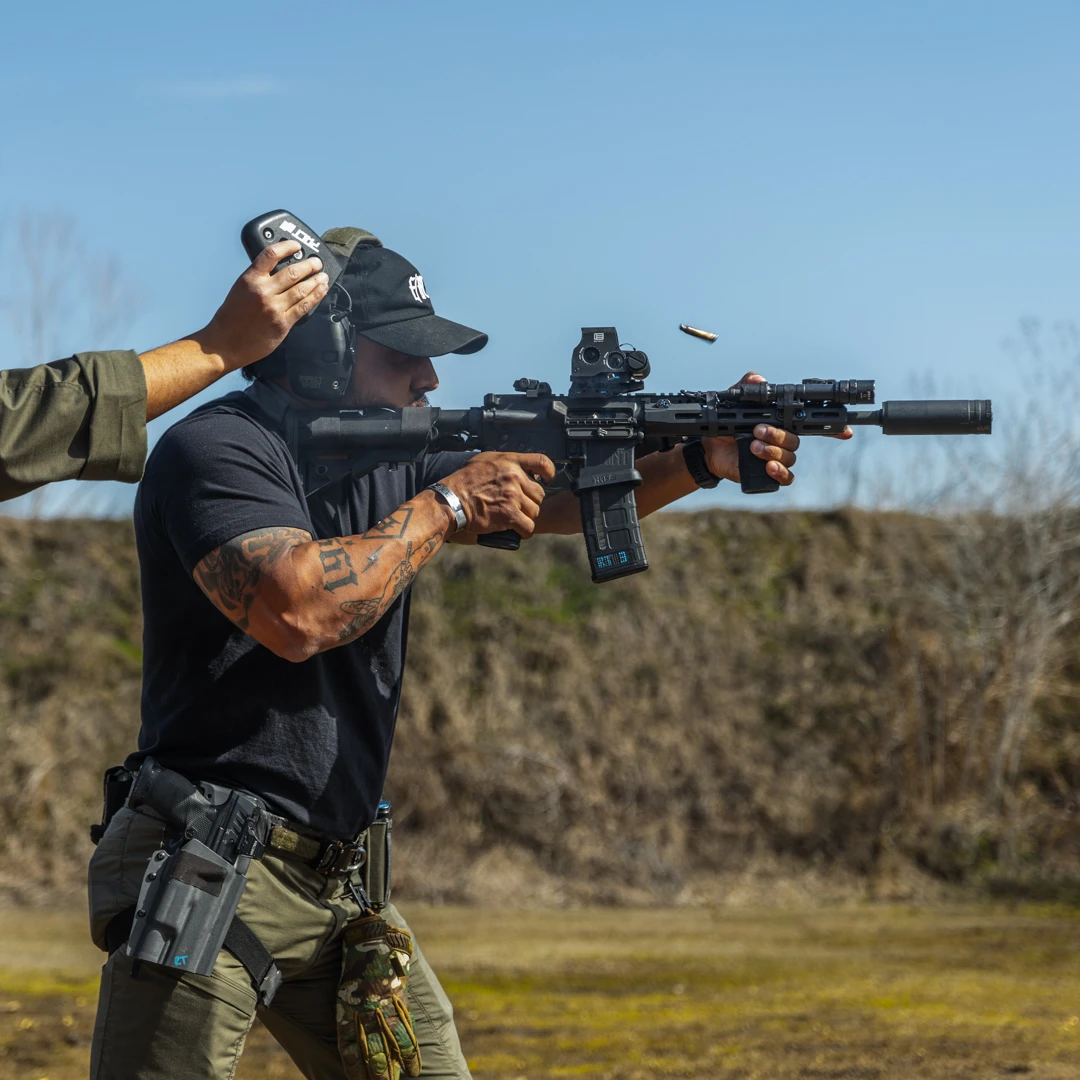
Can You Buy a Suppressor on a 4473 Now? What the October 2026 NFA Change Means
The short answer: In most states, yes. As of October 9, 2026, the ATF no longer requires a Form 4, a tax stamp, or federal registration to buy a suppressor. You fill out a Form 4473, pass a background check, and take it home the same day, just like buying a pistol.
That is a big change. For almost 90 years, buying a suppressor meant months of paperwork, fingerprint cards, and waiting on the government. Here is what happened, how buying one works now, and what has not changed.
What happened?
It started with a tax cut. In 2025, Congress passed the One Big Beautiful Bill Act, which dropped the $200 federal tax on suppressors, short-barreled rifles (SBRs), short-barreled shotguns (SBSs), and "any other weapons" (AOWs) to $0, starting January 1, 2026.
That mattered because the National Firearms Act of 1934 was written as a tax law. The government's power to require registration came from its power to collect the tax. Gun rights groups sued, arguing that once the tax is $0, the registration rules have nothing left to stand on.
On August 5, 2026, a federal judge in the Northern District of Texas agreed. In Silencer Shop Foundation v. ATF (combined with Jensen v. ATF), Judge James Wesley Hendrix ruled the registration and approval rules could no longer be justified under Congress's taxing power. His order only protected the people and companies who sued, plus their members and customers.
The Department of Justice chose not to appeal, and the deadline passed on October 5. Then, on October 9, the ATF issued an open letter extending the same treatment to everyone, nationwide.
How does buying a suppressor work now?
If you live in a state that does not add its own rules, the process looks like any other gun purchase:
- Pick out your suppressor from a dealer (FFL) in your home state, or order online and have it shipped to one.
- Fill out a Form 4473 at the counter.
- Pass a NICS background check.
- Take it home.
No Form 4. No fingerprint cards. No passport photo. No months-long wait for a tax stamp. Some dealers are still finishing their own process changes, so call ahead and ask if they are doing 4473 transfers yet.
What did NOT change?
This is the part worth reading twice.
- Background checks still apply. Dealers must still run every sale through a 4473 and NICS, and keep records. Anyone who can't legally own a gun still can't own a suppressor.
- State law still applies. The ATF's guidance does not override state or local laws. (More on that below.)
- Machine guns and destructive devices are unchanged. They still carry the $200 tax and full NFA rules.
- SBRs and SBSs have extra strings. Taking one across state lines still requires an approved ATF Form 20, and dealer sales of SBRs and SBSs fall under a separate rule the ATF is still writing new forms for.
- Dealers still need their licenses. Businesses that make or sell these items still need the right federal license and special occupational tax.
Does my state allow it?
This is where it gets complicated, because many state laws were written to say a suppressor is legal if it is registered under the NFA. Industry trackers currently sort the states into three groups:
|
Group |
What it means |
Examples |
|---|---|---|
|
No extra state rules (27 states) |
4473 and background check, same day |
Oklahoma, Texas, Florida, Tennessee, Arizona |
|
State law tied to NFA registration (15 states) |
Many dealers are still using a Form 4 to stay safe |
Ohio, Pennsylvania, Georgia, North Carolina, Colorado |
|
Suppressors banned (8 states + D.C.) |
Still illegal for private citizens |
California, New York, New Jersey, Illinois, Massachusetts |
These lists are moving fast. Gun rights groups have already asked the 15 "registration" states to stop enforcing those laws, and some legislatures may act. Check your state's current law, or ask your local dealer, before you buy.
Is this permanent?
Not necessarily. The ATF's change is an enforcement policy, not a repeal of the law. It could be reversed if Congress brings back a tax, a court overturns the ruling, or a future administration rescinds the guidance.
One detail to know: the ATF will still accept NFA registrations if you want them, and you can ask to have existing items removed from the registry. But the ATF says once an item is removed, it can't be re-registered unless the government announces an amnesty. If you already own registered suppressors, think hard before pulling them off the list.
Frequently asked questions
Do I still need a tax stamp to buy a suppressor? No, not at the federal level. As of October 9, 2026, the ATF does not require a tax stamp, Form 4, or registration for suppressors. Your state may still have its own rules.
Do I still need a background check to buy a suppressor? Yes. A licensed dealer must complete a Form 4473 and run a NICS background check, just like any other firearm sale.
Can I buy a suppressor the same day? In states without their own suppressor rules, yes. Once you pass the background check, you can take it home.
Can I buy a suppressor in another state? Generally no. Like a handgun, a suppressor sold by a dealer has to go to a buyer who lives in the dealer's state.
What happens to my pending Form 4? You can ask the ATF to withdraw it, or let it go through if your state still requires registration. Ask your dealer which makes sense for you.
Does this apply to short-barreled rifles too? Partly. Registration is no longer enforced for SBRs and SBSs, but they still need a Form 20 to cross state lines, and dealer sales fall under a separate rule the ATF is still writing new forms for. Ask your dealer how they're handling them.
Can I travel with my suppressor? The ATF says it won't enforce the federal ban on carrying unregistered suppressors across state lines. But state laws along your route still apply, so check each state before you drive.
Built for what's next
More suppressors on the market means more shooters running threaded barrels and suppressor-height sights. If you're setting up a suppressor-ready carry gun, make sure your holster is built for it. (Spoiler alert: ours are.)
This post is general information, not legal advice. Laws change quickly, and state rules vary. Talk to a licensed dealer or a firearms attorney about your situation.