



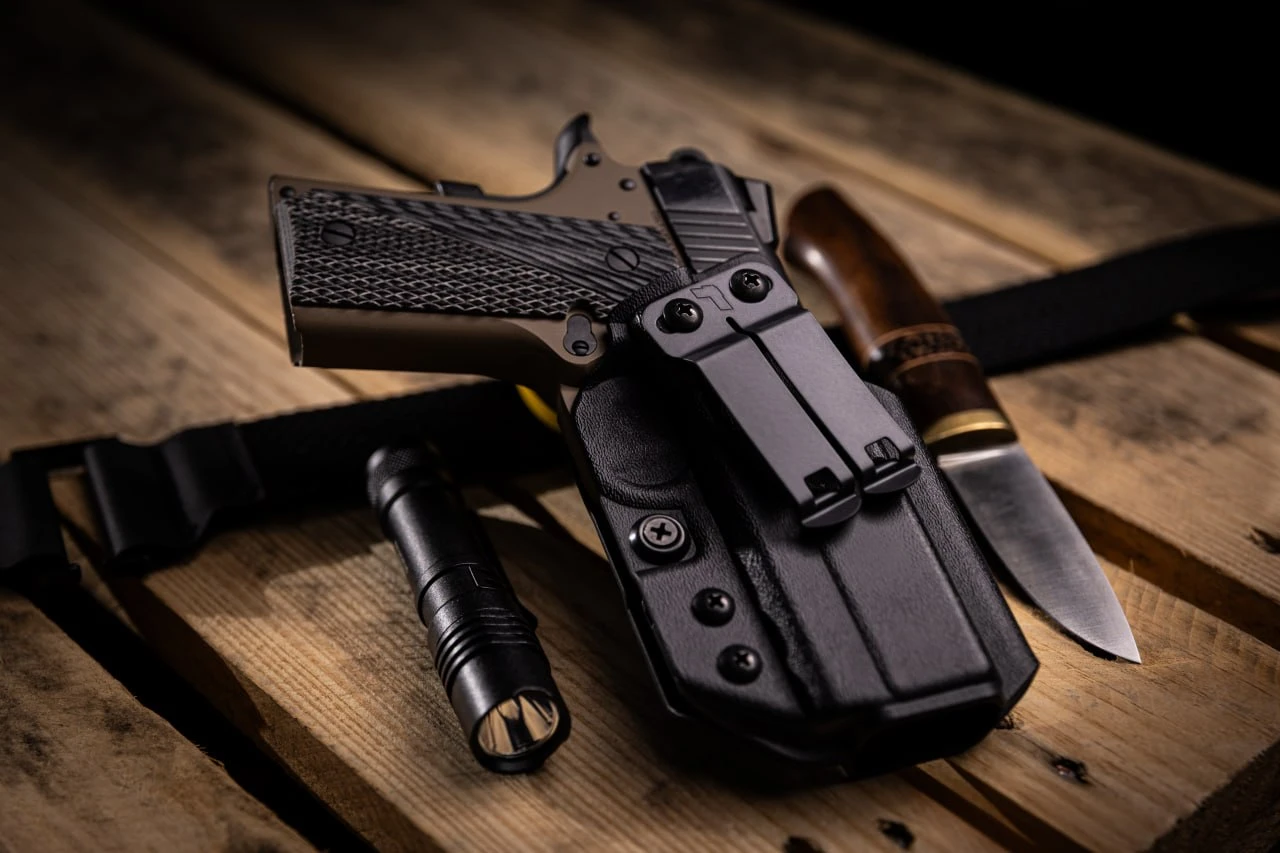
Tulster 1911 Holster Retention: How to Loosen or Tighten It in 2 Minutes
A 1911 is a lot of steel to carry inside the waistband, and the holster has to do two jobs at once: hold that pistol firmly through a full day of sitting, bending, and climbing in and out of the truck, then let it go cleanly the moment you need it. Get the retention wrong in either direction, and you feel it. Too tight, and your draw fights you. Too loose, and you start checking your waistband every time you stand up.
The good news is that you don't need to send your holster back or heat any Kydex to fix it. If you carry a Tulster 1911 holster you will be able to dial retention in yourself with a Phillips screwdriver in about two minutes.
Quick answer: To adjust fitment on a Tulster 1911 holster, unload your pistol, then turn the Phillips retention screw near the trigger guard counterclockwise to tighten. This will feel incorrect, but it is necessary to tighten. Be careful not to overtighten, though; you'll lock the gun in the holster.
Which Tulster 1911 holsters have adjustable retention?
Tulster makes two IWB holsters for the 1911, each cut for 3.5", 4.25", and 5" rail lengths.
The Profile+ and OATH are both adjustable with the same Holster Stabilization Device (HSD). If your holster feels off, contact Tulster support rather than modifying it.
Why does adjustability matter more on a 1911 than on a polymer striker gun? Finish and fit. Two 1911s with the same rail length can differ in slide finish, frame dimensions, and grip setup. A blued Colt, a Cerakoted Springfield, and a stainless Ruger don't all slide against Kydex the same way, and a brand-new holster also feels tighter than it will after a few hundred draws. The HSD lets one holster fit the gun you actually own.
How to adjust fit on a Tulster 1911 holster
All you need is a Phillips screwdriver, your unloaded pistol, and a few minutes. Tulster confirms that every 1911 holster's fit is dialed in with a Phillips screwdriver.
- Unload and clear the pistol. Drop the magazine, lock the slide back, and visually and physically confirm the chamber is empty. Put the ammunition away. Every test draw below is done with an empty gun.
- Find the retention screw. On the 1911 holster, it sits on the holster body just in front of the trigger guard, where the Kydex clamps around it. Don't confuse it with the clip screws, which control cant and ride height.
- Turn counterclockwise to tighten. If the pistol shifts when you shake the holster upside down, or the click is faint, turn the screw counterclockwise a quarter-turn for more hold.
- Turn clockwise to loosen. If the draw feels sticky or you have to rock the pistol free, turn the screw clockwise a quarter-turn. That relaxes the clamp on the trigger guard and makes the draw smoother.
- Test, then repeat. Seat the empty pistol until it clicks, then draw it five or six times from your normal carry position. Adjust a quarter-turn at a time until it feels right. Small moves go a long way.
How to tell when retention is right
Right retention means the pistol stays put through anything your day throws at it, and comes out with one clean, firm pull. A simple check: with the empty pistol holstered, turn the holster upside down and give it a light shake. The gun should stay seated. Then draw from your carry position. You should feel a distinct click on the way in and a positive release on the way out, without rocking, twisting, or a second tug.
A few mistakes to avoid:
- Adjusting with a loaded gun. Be safe. Unload first, every time.
- Big turns. A full turn can swing the holster from loose to locked. Quarter-turns keep you in control.
- Overtightening the screw. Snug is enough. Cranking it down can strip the threads or crush the hardware.
- Mixing up screws. The clip screws change cant, not retention. Tulster notes the clip hardware ships loose on purpose so you can set cant first (product guide).
- Forgetting break-in. New Kydex relaxes slightly over the first weeks of carry. Recheck the feel after a couple hundred draws.
Frequently asked questions
Does Tulster make a 1911 holster? Yes. Tulster offers the Profile+ 1911 and the OATH 1911, both inside-the-waistband holsters in 3.5", 4.25", and 5" rail lengths.
What tool do I need to adjust my Tulster holster's retention? A standard Phillips screwdriver. No hex keys or Torx bits are required for the retention screw on 1911 holsters.
Which way do I turn the screw to loosen a Tulster holster? Clockwise. Turning the retention screw clockwise reduces retention for an easier draw. Turning it counterclockwise increases tightness.
How much should I turn the screw at a time? A quarter-turn. Test the draw with an unloaded pistol after each adjustment, since small changes make a noticeable difference.
Is the Tulster Profile+ 1911 ambidextrous? No. The Profile+ 1911 comes in separate right- and left-hand versions. The OATH 1911 is ambidextrous.
Conclusion
A holster you have to fight isn't a holster you'll carry, and a 1911 deserves better than "close enough." With the 1911 holsters, the fix is a Phillips screwdriver and a few quarter-turns: counterclockwise when the draw is too loose, clockwise when the gun needs less hold. Set it once, lock it in, and get back to carrying.
Still not sure it's right? Reach out to our team. Every Tulster holster is made in Jenks, Oklahoma, backed by a lifetime warranty and hassle-free returns, and we'd rather help you get it right than have you settle.