



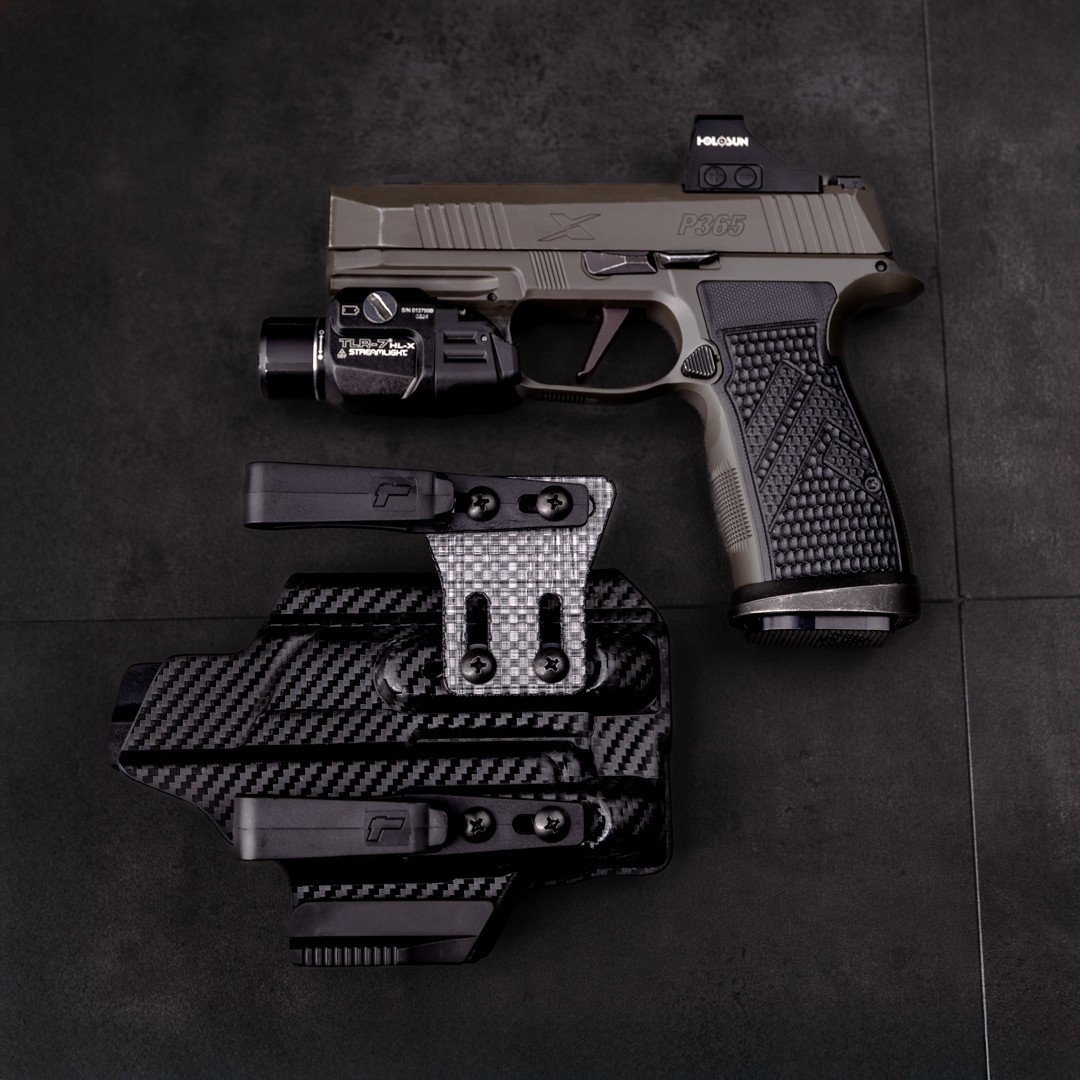
Low-Light Reality: Why a Weapon Light—and Training With It—Matters
Most defensive encounters don’t happen under perfect lighting. They happen in parking lots at dusk, inside dark hallways, or during the early morning hours when visibility is compromised. If you carry a firearm for personal protection, understanding low-light self-defense is not optional—and neither is having a weapon-mounted light (WML) and the training to use it correctly.
This guide breaks down why a weapon light matters, what problems it solves, and why training is just as important as the light itself.
The Reality of Low-Light Encounters
Statistically and practically, poor lighting is the norm—not the exception. Darkness introduces uncertainty, and uncertainty is dangerous. In low-light conditions, the human eye struggles to:
- Identify threats accurately
- Distinguish hands, faces, or objects
- Track movement reliably
- Maintain depth perception
Without a reliable light source, even skilled shooters are forced to guess—and guessing has no place in defensive decision-making.
You are responsible for every round you fire. That responsibility begins with being able to see clearly.
Positive Target Identification Is Non-Negotiable
One of the most critical rules of firearm safety is knowing your target and what’s beyond it. In low light, that rule becomes exponentially harder to follow.
A weapon-mounted light allows for:
- Positive target identification before making a decision
- The ability to confirm whether a person is a threat or not
- Reduced risk of tragic misidentification
Shadows lie. Lighting reveals truth.
Why a Weapon Light Beats Ambient Light Alone
While handheld flashlights are useful, a weapon-mounted light offers distinct advantages in a defensive context:
1. Hands-On Control
A WML allows you to maintain a full firing grip while illuminating the target—no need to juggle tools under stress.
2. Light Where the Muzzle Is
The light follows your point of aim, simplifying alignment and reducing hesitation during threat assessment.
3. Faster Decision-Making
Clear visual information speeds up processing. You see sooner, decide sooner, and act with more confidence.
A weapon light doesn’t replace situational awareness—it enhances it.
The Hidden Mistake: Owning a Light Without Training
Simply attaching a light to your firearm is not enough.
Without proper low-light training, many shooters:
- Flag non-threats with the muzzle while searching
- Overuse constant-on modes and give away position
- Struggle with light activation under stress
- Experience poor holster compatibility or unsafe draws
Training teaches you when to use light, how to use it, and when not to.
What Proper Low-Light Training Teaches You
Training with a weapon light builds skills that daylight shooting never touches:
- Momentary vs constant activation techniques
- Managing spill, glare, and backlighting
- Shooting with visual disruption and shadows
- Movement, angles, and use of cover in darkness
- Drawing and reholstering safely with a WML-equipped holster
Low-light training doesn’t just improve shooting—it improves judgment.
Confidence Comes From Repetition
Fear thrives in uncertainty. Confidence comes from familiarity.
When you train regularly with a weapon light:
- Activation becomes subconscious
- Light discipline improves
- Decision-making speeds up
- Stress response becomes manageable
You don’t want the first time you activate your light under pressure to be when your life depends on it.
Gear Matters—Especially the Holster
A weapon light changes how your firearm interfaces with a holster. A proper light-bearing holster ensures:
- Secure retention based on the light, not the trigger guard
- Safe trigger coverage
- Consistent draw and reholster
- Comfort and concealability for everyday carry
Training without proper gear creates bad habits. The right setup reinforces good ones. For example, the ARC holster offers secure retention that you can set and forget.
Light Reveals Responsibility
Carrying a firearm means accepting responsibility for your actions, your decisions, and the outcomes that follow. In low-light environments, a weapon-mounted light is not an accessory. It’s a critical safety and decision-making tool.
But ownership alone isn’t enough.
Train with it. Practice with it. Build discipline around it.
Because in the moments that matter most, what you can’t see can hurt you—or someone else.
Low light doesn’t forgive mistakes. Preparation prevents them.