



Raising the Standard for Civilian First Aid Readiness
When emergencies happen, you don’t wait for perfect conditions. You don’t wait for sirens. And you don’t wait for professionals to arrive. That reality is exactly what drives Joseph Schaelling, founder of Zero Hour Med.
Schaelling built Zero Hour Med around a simple but powerful belief: the person closest to the emergency is the first responder. Whether it’s a traumatic injury, a vehicle accident, a workplace incident, or a critical medical event at home, preparedness in the first few minutes can mean the difference between life and death.
This isn’t theory. It’s a responsibility.
The Importance of Civilian Readiness in First Aid Response
Here’s the hard truth: average EMS response times in many areas range from 7–15 minutes — sometimes longer in rural communities.
Severe bleeding can become fatal in under five minutes.
That gap matters.
1. You Are the First Responder
In a critical event, the closest capable person determines the outcome. Not a hospital. Not an ambulance. You.
Civilian first aid readiness isn’t about paranoia — it’s about responsibility. Car crashes, workplace accidents, range injuries, construction mishaps, and household emergencies happen every day. Preparedness transforms bystanders into assets.
Joseph Schaelling’s training philosophy reinforces one principle:
Skill removes hesitation.
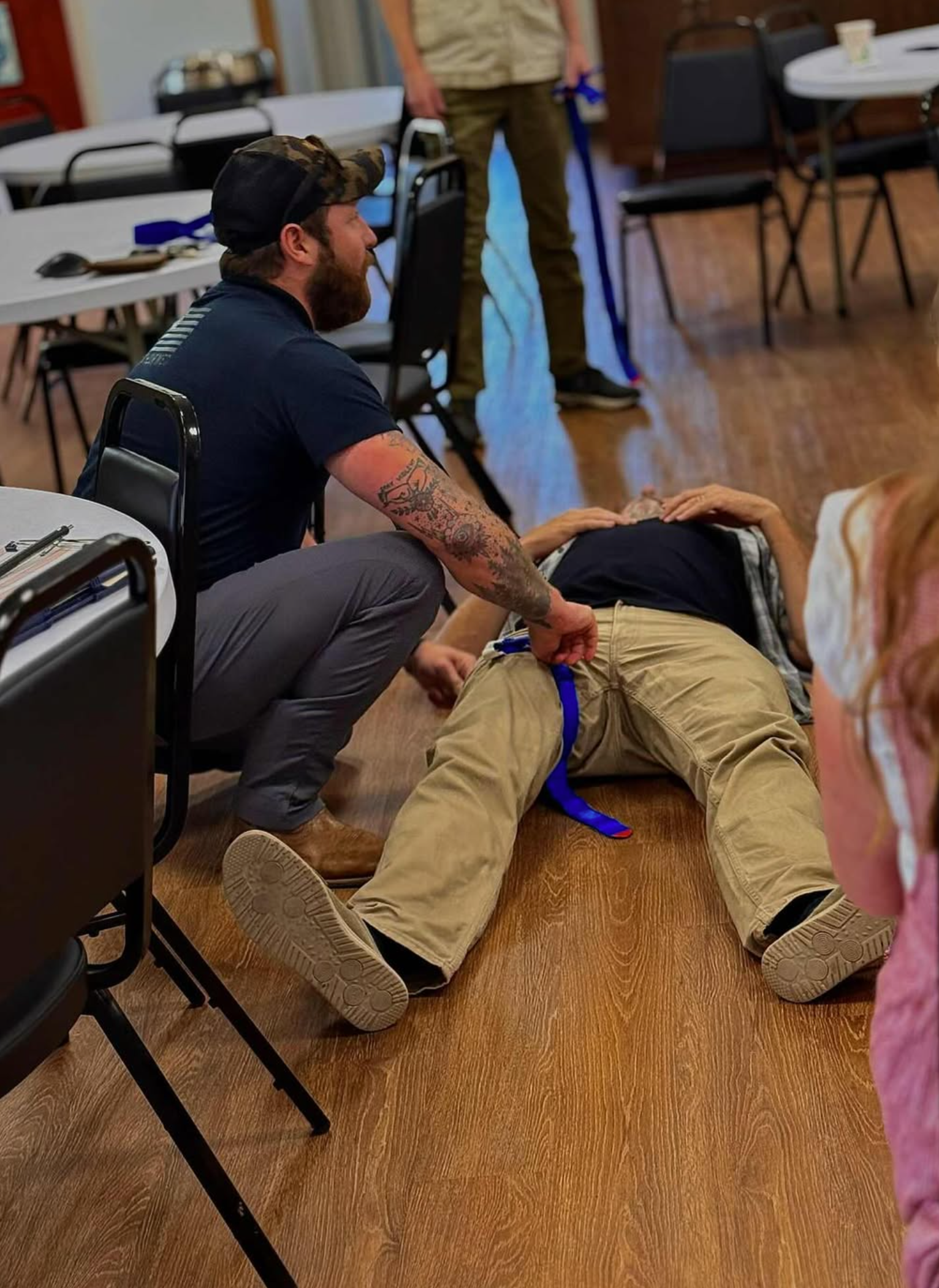
When someone has practiced applying a tourniquet under stress, they don’t freeze. They act.
2. Hemorrhage Control Saves Lives
Uncontrolled bleeding remains one of the leading preventable causes of death in trauma. Yet many civilians have never applied a tourniquet or packed a wound.
Programs like those offered by Zero Hour Med focus heavily on:
-
Rapid bleeding assessment
-
Proper tourniquet placement and tightening
-
Effective wound packing
-
Maintaining pressure under stress
These are not advanced medical procedures. They are teachable skills — and they work.
Civilian medical training fills the gap between incident and professional care.
3. Prepared Communities Are Stronger Communities
Emergencies are unpredictable, but response doesn’t have to be.
When businesses train employees in trauma care…
When churches equip volunteers with bleeding control knowledge…
When families understand basic first aid response…
Communities become resilient.
Zero Hour Med’s approach encourages individuals to take ownership of preparedness instead of outsourcing it entirely to emergency services.
Preparedness isn’t extreme. It’s mature.
4. Confidence Reduces Chaos
One of the most overlooked elements of civilian first aid training is psychological readiness.
People don’t fail in emergencies because they don’t care. They fail because they panic.
Stress-inoculation style training — like that emphasized by Joseph Schaelling — builds:
-
Muscle memory
-
Decisive action
-
Clear communication
-
Emotional control
When training mimics real-life pressure, performance improves in real emergencies.
That’s the difference between checking a box and building capability.
Who Is Joseph Schaelling?
Joseph Schaelling is a medical educator and preparedness advocate focused on practical, real-world trauma training. His mission through Zero Hour Med is clear: equip civilians, businesses, and responsible citizens with the knowledge and skills to act immediately in life-threatening emergencies.
Rather than relying on outdated classroom-only models, Schaelling emphasizes:
-
Hands-on, scenario-based training
-
Realistic stress exposure
-
Evidence-based trauma care principles
-
Confidence through repetition
He understands something many people avoid thinking about: emergencies are chaotic. Training must reflect that.
Zero Hour Med was created to bridge the gap between professional emergency medicine and civilian capability.
What Is Zero Hour Med?
Zero Hour Med is a civilian-focused medical training company dedicated to practical trauma response education. The name itself reflects the philosophy: “Zero Hour” is the moment something goes wrong — and you are there.
The company provides training that focuses on:
-
Bleeding control and hemorrhage management
-
Tourniquet application
-
Airway management basics
-
Wound packing and pressure techniques
-
Mass casualty response fundamentals
-
Emergency decision-making under stress
Unlike passive first aid courses, Zero Hour Med prioritizes active skill development. The goal isn’t just awareness — it’s competence.
Why Zero Hour Med Stands Out in Medical Training
There are countless first aid courses available. What sets Zero Hour Med apart is its unapologetic focus on realism and responsibility.
Joseph Schaelling understands that:
-
Knowledge without practice is fragile.
-
Practice without stress is incomplete.
-
Skill without mindset is unreliable.
Zero Hour Med integrates all three.
This approach resonates especially with responsible gun owners, business leaders, range instructors, parents, and preparedness-minded civilians who understand that self-defense and medical response go hand in hand.
Medical readiness is the other half of responsible preparedness.
The Bigger Mission: Normalizing Preparedness
One of the most important contributions Joseph Schaelling and Zero Hour Med make is cultural.
They normalize the idea that:
-
Carrying medical gear is responsible.
-
Learning trauma care is wise.
-
Being prepared is not extreme — it’s prudent.
In a world where uncertainty exists, competence brings peace of mind.
And that’s what Zero Hour Med ultimately provides — not fear-based training, but skill-based confidence.
Civilian first aid readiness isn’t about becoming a paramedic. It’s about buying time. It’s about stepping in during the zero hour when someone’s life depends on immediate action.
The truth is simple:
Emergencies don’t schedule themselves.
The question is whether you’ll be ready when they happen.
If you care about preparedness, personal responsibility, and protecting the people around you, investing in real-world trauma training isn’t optional — it’s foundational.